Advanced Liquid Package Solution
Any question?
Get in touch


Reverse osmosis, commonly shortened to RO, is one of the most widely used membrane technologies in water purification. By applying pressure to water and passing it through a semipermeable membrane, an RO system can reduce many dissolved salts and other contaminants that ordinary filters may not remove effectively.
However, RO is not simply a single filter. A complete RO water purifier machine usually combines pretreatment, the RO membrane, and sometimes additional filtration or disinfection stages. The right configuration depends on the source water, treatment goals, and required water quality.
This guide explains what RO means in a water purifier, how reverse osmosis works, what contaminants it can reduce, and how it compares with other filtration methods. It also covers the benefits, limitations, applications, and role of RO in bottled water production line.
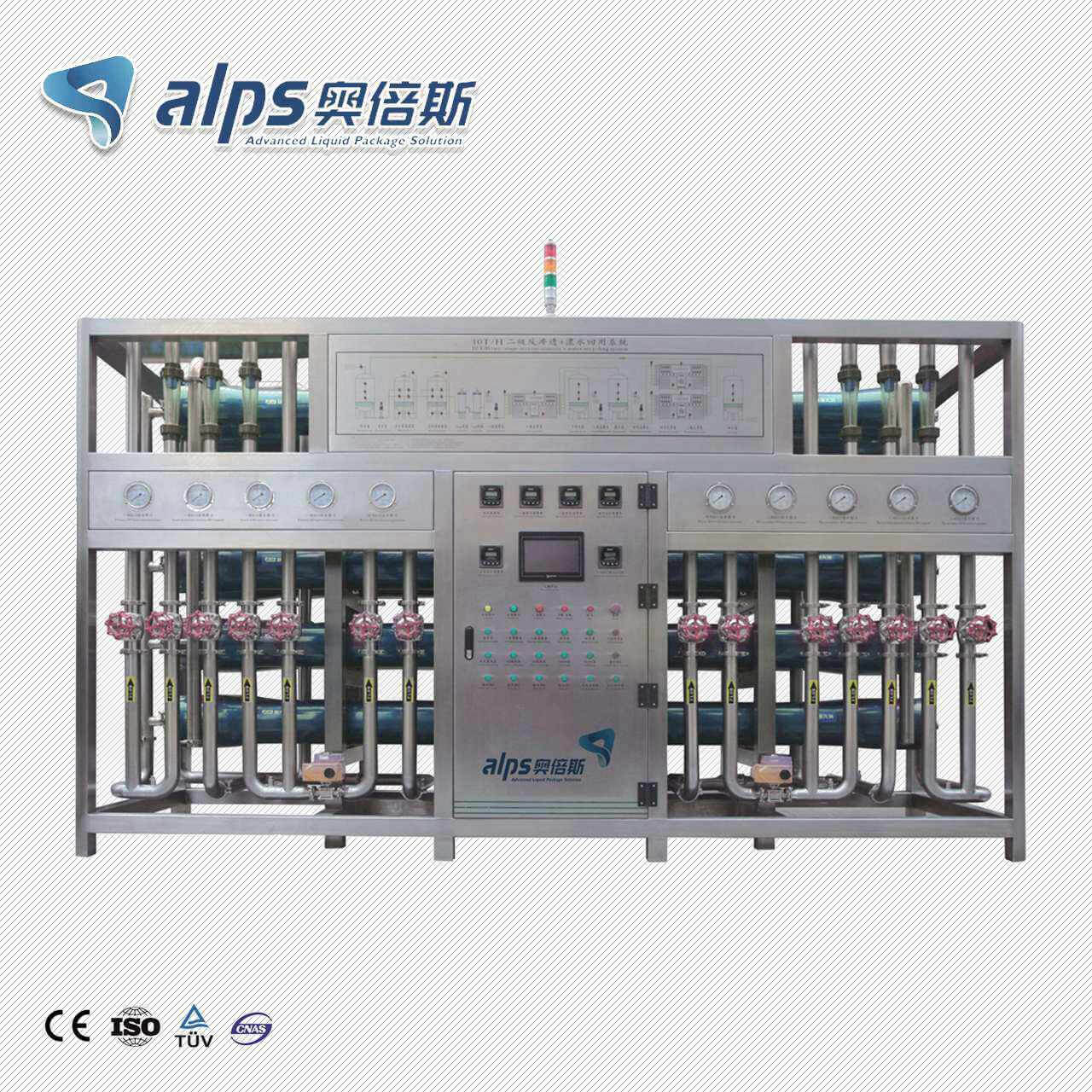
RO stands for Reverse Osmosis, a water treatment process that uses pressure to move water through a semipermeable membrane. The membrane allows water molecules to pass while retaining many dissolved substances. This makes RO different from simple particle filtration and explains why it is widely used when dissolved contaminants need to be reduced.
Point | What It Means |
RO full form | Reverse Osmosis |
Main component | RO membrane |
How it works | Pressure pushes water through a semipermeable membrane |
Main purpose | Reduces dissolved salts and other contaminants |
Needs pressure | Yes, usually supplied by a pump |
Produces wastewater | Yes, as a concentrate stream |
Removes everything | No; performance depends on the membrane and system design |
In practice, an RO purifier normally works as part of a multi-stage treatment system, rather than operating as a standalone membrane.
An RO purifier usually combines several treatment stages before and after the membrane. Each stage has a specific role, helping protect the RO membrane and improve the final water quality.
Stage | Main Function |
Sediment filter | Removes sand, rust, and suspended particles |
Carbon filter | Reduces chlorine, odors, and some organic compounds |
RO membrane | Reduces dissolved salts and specific contaminants |
Post-carbon filter | Helps improve taste and odor |
Mineral filter | Optionally adds selected minerals |
UV stage | Optionally provides additional microbial control |
The exact configuration varies with the source water and treatment target. More filtration stages do not automatically mean better performance, so system design should match the actual water quality and application.
RO is effective at reducing many dissolved substances, but it should not be treated as a universal purification method. Its actual performance depends on the membrane, operating conditions, pretreatment, and feed-water quality.
Contaminant | RO Performance |
Dissolved salts | High reduction |
TDS | Significant reduction |
Fluoride | Can reduce |
Nitrate | Can reduce |
Some heavy metals | Can reduce |
Some microorganisms | Can reduce |
Chlorine | Usually handled by pretreatment |
RO cannot guarantee the removal of every contaminant. Some substances may require carbon filtration, UV treatment, or other processes. It can also reduce beneficial dissolved minerals, which is why some systems include a mineral adjustment stage after RO. For drinking water, water treatment solution should therefore be selected according to the source-water analysis.
Different filtration methods target different water-quality concerns. The key difference is whether the system focuses on dissolved substances, microorganisms, particles, or taste-related compounds.
Method | Main Target | TDS Reduction | Wastewater |
RO | Dissolved salts and contaminants | Yes | Yes |
UV | Microorganisms | No | No |
UF | Particles and some microorganisms | Limited | No |
Carbon | Chlorine, odors, some organics | No | No |
RO is generally selected when dissolved contaminants or high TDS are the main concern. UV can provide additional microbial control, while UF and carbon filtration are often used as complementary treatment stages. In practice, these methods may be combined .
RO is useful when dissolved contaminants are the main concern. Key benefits include:
Reducing TDS and dissolved contaminants
Improving taste in some water sources
Treating high-TDS water
Working with UV, mineralization, and other treatment stages
RO also has practical trade-offs:
Produces concentrate wastewater
Requires filter and membrane replacement
Can reduce dissolved minerals
Some systems need electricity
Performance depends on proper maintenance
Home: Drinking water, high-TDS or hard water, and specific contamination concerns.
Commercial and Industrial: Bottled water, beverage production, food processing, laboratories, healthcare, and 5-gallon water production.
Whether RO is necessary depends on the source-water quality and treatment target. Water testing should come before equipment selection.
Industrial RO systems are designed for continuous production and require more capacity, monitoring, and process control than typical home units. The main differences are summarized below.
Factor | Home RO | Industrial RO |
Capacity | L/day | m³/h |
Pump | Booster pump | High-pressure pump |
Monitoring | Basic | Flow, pressure, conductivity |
Pretreatment | Compact filters | Multi-stage treatment |
Application | Drinking water | Bottled water and beverages |
An industrial system normally includes raw-water analysis, pretreatment, an RO membrane system, recovery control, and concentrate management. These elements help maintain stable operation under continuous production.
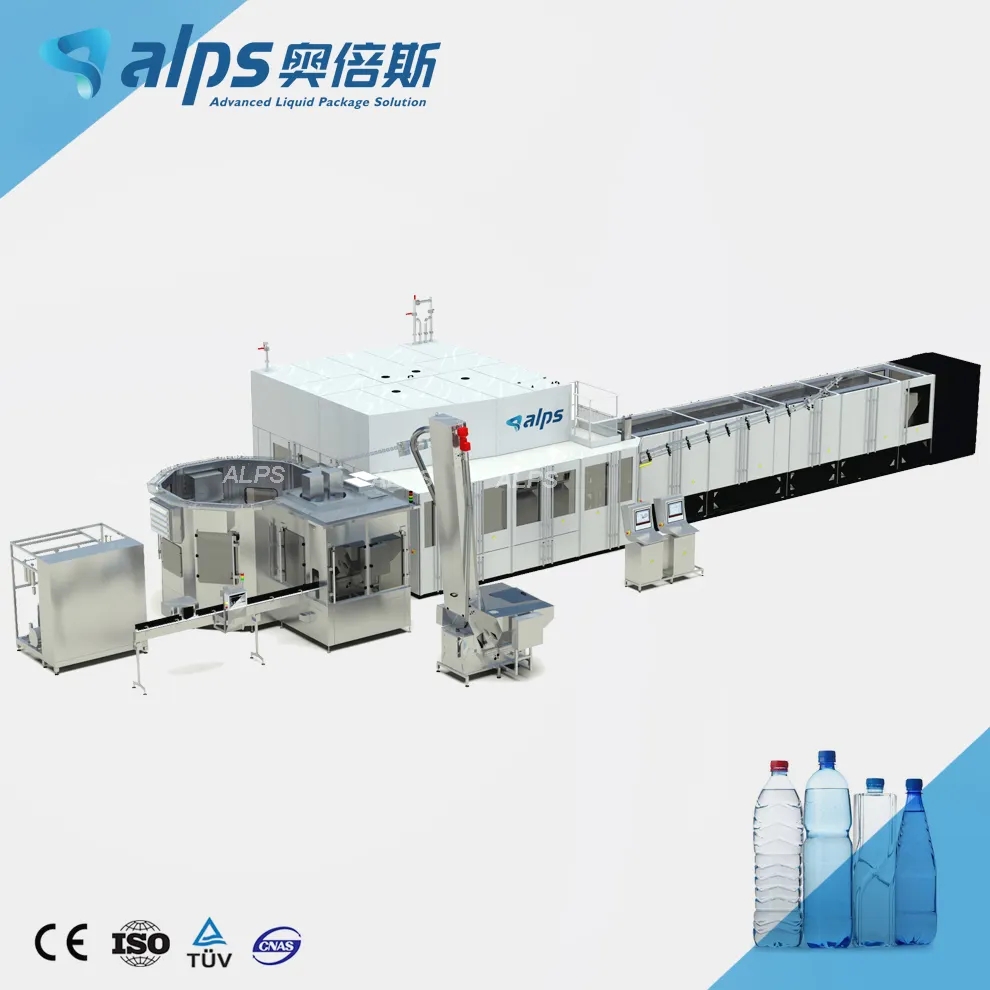
RO is only one part of the production line:
Raw Water→Pretreatment→RO→Disinfection→Filling→Capping→Labeling→Packing
Depending on the product, the complete setup may also include PET bottle blowing machine, water filling, labeling, packing, or 5-gallon production equipment.
For a bottled water plant, RO must work with downstream equipment and the overall workshop layout. A turnkey solution can integrate water treatment, filling, blowing, labeling, packing, and production-line planning into one system.
Start with source-water analysis and define the treatment target before selecting equipment. Key factors include capacity, feed-water TDS, recovery rate, membrane type, pretreatment, certification, energy use, replacement cost, and after-sales support. Industrial systems also need to match m³/h capacity, production lines, workshop layout, and water, electricity, and gas requirements.
Maintenance
Component | Typical Service |
Sediment filter | 3–6 months |
Carbon filter | 6–12 months |
RO membrane | Often 2–3 years |
UV lamp | 6–12 months |
Actual replacement intervals depend on source-water quality, usage, system design, and manufacturer recommendations.
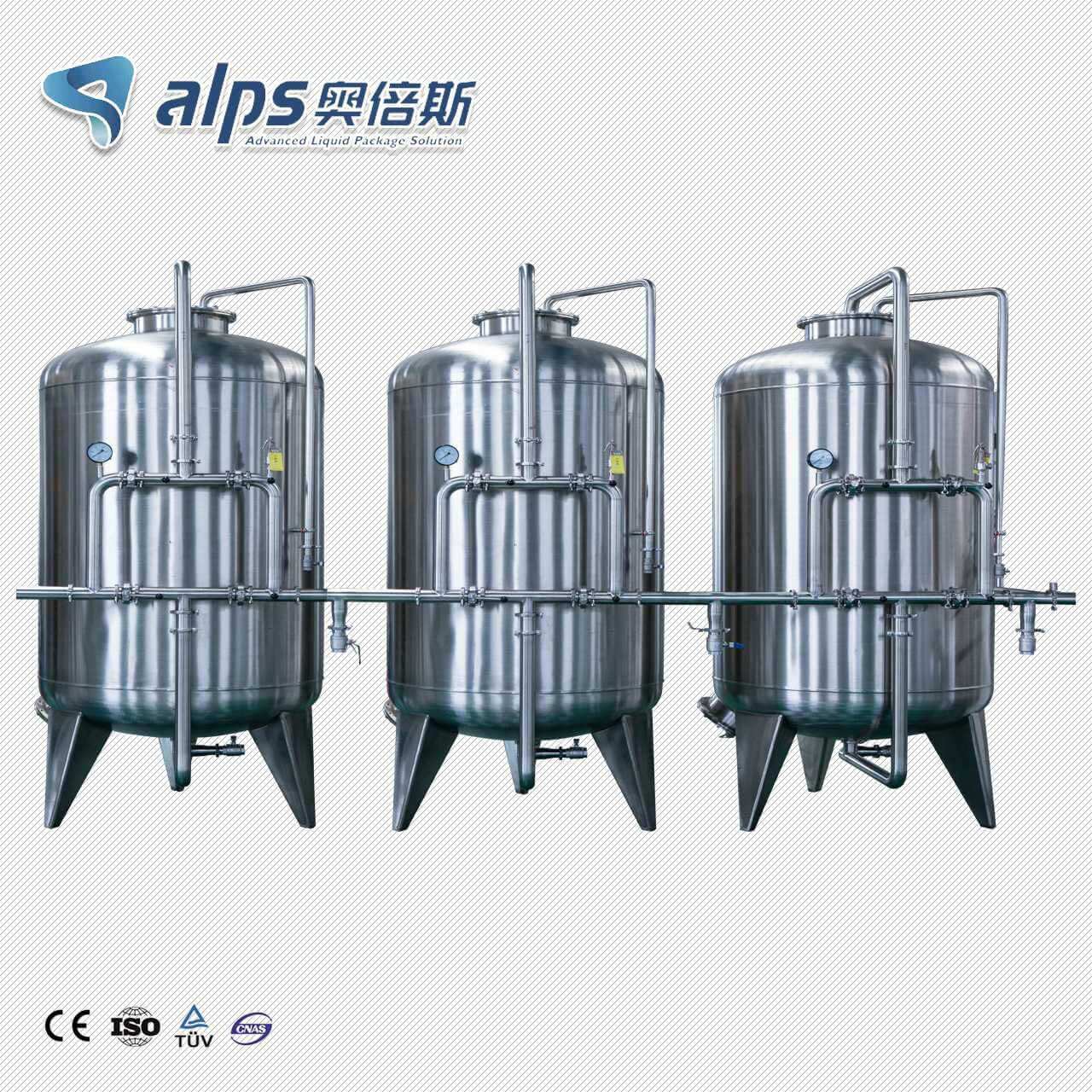
RO, or Reverse Osmosis, uses a semipermeable membrane to reduce dissolved salts, TDS, and other specific contaminants. It can be combined with pretreatment, UV, carbon filtration, or mineralization, but it also has limitations such as wastewater, membrane replacement, and maintenance requirements. The right system depends on source-water quality, treatment goals, capacity, and application.
For bottled water production, RO is only one part of a complete water treatment and filling process. Alps Machine provides water treatment systems, filling and packing machinery, PET bottle blowing equipment, and turnkey plant solutions. Contact Alps Machine to discuss your RO water treatment and bottled water production needs.





By continuing to use the site you agree to our privacy policy Terms and Conditions.