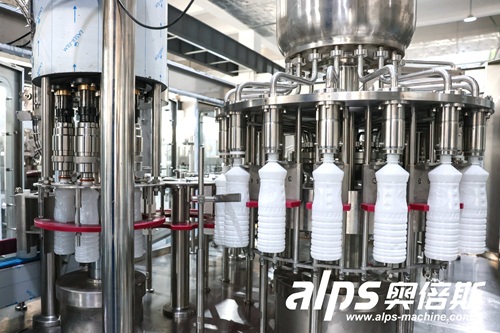
From NFC cold-pressed juices to concentrated blends and pulp-rich fruit drinks, the juice beverage market continues to expand rapidly. Behind every bottle on the shelf is a production line built around one critical piece of equipment — the juice filling machine.
Juice filling machines are the heart of any juice production line. Unlike
mineral water filling machines, juice fillers must meet far stricter standards for hygiene, temperature control, and material compatibility. The natural sugars, organic acids, and fruit pulp in juice create a much more demanding environment for both equipment and operators.
Getting the installation right from the start — and keeping up with proper maintenance — directly impacts product quality, food safety, and the long-term performance of your filling line.
In this guide, we cover everything you need to know: how to install a juice filling machine correctly, and how to maintain it for consistent, safe production.
Equipment Installation
Early Understanding
Before any equipment arrives on-site, preparation is everything.
Start by confirming your product specifications with the equipment supplier. Key parameters include:
Juice type — NFC (not from concentrate), reconstituted juice, or pulp-rich juice
Filling method — hot filling or aseptic cold filling
These two factors directly determine which type of juice filling machine you need. Getting this wrong at the start leads to costly adjustments later.
Once the equipment is confirmed, study all supplier-provided materials — technical drawings, installation videos, and operation manuals. Familiarize yourself with the machine's components before it arrives.
Also plan your utility connections early. Juice filling lines require more infrastructure than water lines:
| Utility | Water Filling Line | Juice Filling Line |
| Water supply | Required | Required |
| Electricity | Required | Required |
| Compressed air | Required | Required |
| Steam supply | Not required | Required |
| Chilled water | Not required | Required |
Early utility planning prevents delays during installation.
Equipment Placement
Begin by checking all equipment and accessories against the supplier's packing list. Report any missing or damaged items before installation begins.
Once positioned, level the machine carefully and lock all floor pads firmly. This reduces vibration during operation and protects long-term mechanical performance.
For electrical and air connections:
Juice filling lines have additional placement requirements that water filling lines do not:
Allow extra floor space for sterilization units (such as a UHT or HTST pasteurizer) and a degassing machine. These are standard components in juice production but absent in water filling setups.
Floor and wall surfaces in the filling area must be resistant to high temperatures and acidic cleaning agents used during CIP (clean-in-place) cycles. Standard coatings used in water filling rooms may not be suitable.
Steam pipelines and chilled water pipelines must also be planned and installed at this stage — not added later.
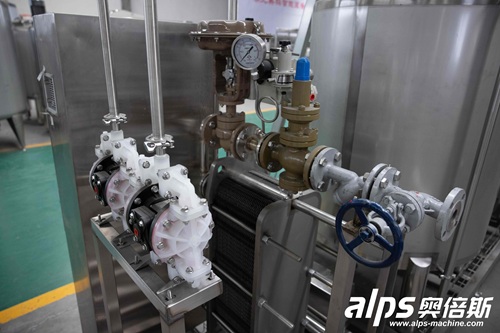
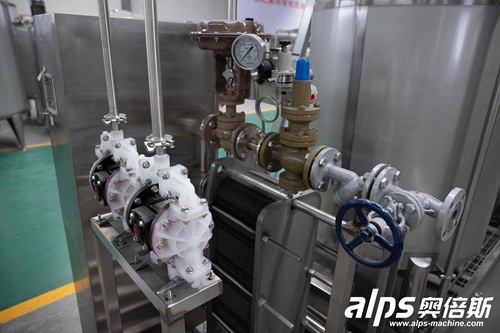
Piping & Hygienic Standards
This is where juice filling installation differs most significantly from water filling — and where shortcuts cause the biggest problems.
Material selection matters.
Juice pipelines must use 316L stainless steel throughout. Water filling lines can use the more common 304 grade, but 316L offers superior resistance to the organic acids naturally present in juice.
Dead zones are unacceptable.
All pipework must be designed with zero dead legs — sections of pipe where liquid can pool and stagnate. Dead zones trap juice residue, which becomes a breeding ground for bacteria. Every pipeline run must be fully drainable and reachable by CIP cleaning flow.
Internal surface finish is critical.
Pipe interiors must be electropolished or mechanically polished to a smooth finish. Rough surfaces harbour juice residue and make effective cleaning far more difficult.
All fittings and valves must meet sanitary standards.
Use hygienic-grade clamp fittings (such as tri-clamp / DIN 11851) and sanitary-grade valves throughout. Standard industrial fittings used in water lines are not appropriate for juice applications.
Commissioning & Training
Commissioning a juice filling line follows a similar process to water filling — the supplier's engineers will visit on-site to guide installation checks, test runs, and initial adjustments.
However, juice filling commissioning takes longer.
The key additional step is sterilization verification: the pasteurization or UHT system must be tested to confirm that target temperatures are reached and held consistently throughout the pipeline. This is a food safety requirement, not just an equipment check.
During the training period, operators must be trained on and should document:
CIP procedure — correct sequence, chemical concentrations, temperatures, and cycle times
Hot filling temperature control — how to monitor and respond to temperature deviations
Emergency stop procedure — actions to take when a fault occurs mid-production
Do not rely on memory alone. All training content should be compiled into written Standard Operating Procedures (SOPs) and kept accessible on the production floor. This is especially important for juice lines, where process deviations carry food safety risks.
Equipment Maintenance
Equipment failure disrupts production and increases costs. For juice filling lines, poor maintenance also creates food safety risks. A structured maintenance routine is essential.
Read the Manual & Understand the Equipment
Before operating any juice filling machine, read the supplier's manual thoroughly — including installation notes and safety warnings.
Understanding how the equipment works makes it far easier to identify problems early and respond correctly when something goes wrong.
For juice filling lines specifically, operators should also familiarise themselves with:
The CIP procedure — sequence, chemical types, concentrations, and cycle duration
Hot filling temperature control — how the system maintains target fill temperatures and what to do if readings deviate
This knowledge is the foundation of safe, consistent juice production.
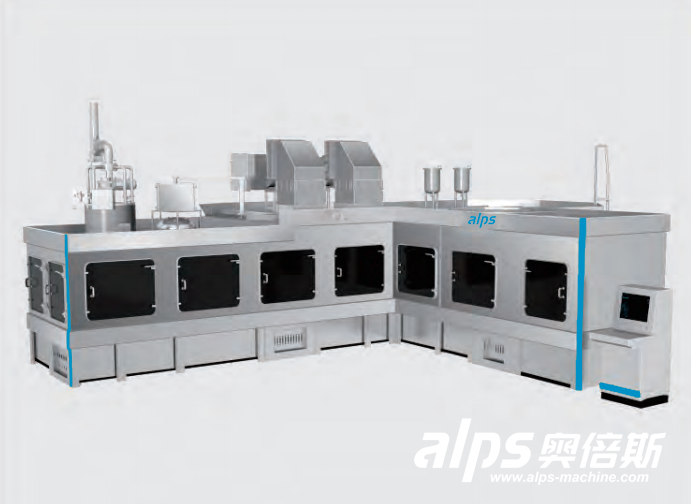
Ensure Stable Supply of Water, Electricity, Gas & Steam
Utility supply must be stable and continuously monitored. Inspect water, electricity, and compressed air systems on a regular schedule. Prepare a contingency plan for sudden failures in any of these systems.
Juice filling lines require two additional utilities that water lines do not: steam and chilled water.
Both must be included in your routine inspection schedule. Temperature fluctuations in either system directly affect pasteurization performance and final product quality. Even brief deviations can compromise food safety.
Check Seals & Gaskets Regularly
During the run-in period, it is common for fasteners to loosen and lubrication to deplete faster than normal. Inspect all mechanical connections and lubrication points frequently during this phase.
Juice filling lines face an additional challenge: organic acids in juice are corrosive to standard sealing materials.
Standard rubber gaskets will degrade faster than expected when exposed to fruit-based products. Use only acid-resistant seal materials such as EPDM or PTFE throughout the filling system.
Establish a scheduled replacement cycle for all seals and gaskets — do not wait for visible leaks. A compromised seal can contaminate the product and force an unplanned shutdown.
Handle Faults Immediately
When a fault is detected, press the emergency stop button without delay. If necessary, shut down the power supply completely before investigating the cause.
Do not restart the machine until the fault has been identified and resolved.
For juice filling lines, fault response requires one additional step: assess whether the product in the line has been exposed to any microbiological contamination risk. If there is any doubt, do not release that batch. CIP the system before resuming production.
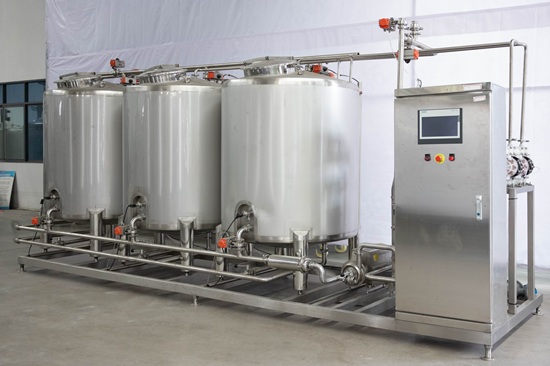
Daily Cleaning — CIP is Essential
This is the single most important difference between maintaining a juice filling line and a water filling line.
Water filling equipment requires daily cleaning to stay dry and hygienic. That standard is not sufficient for juice.
Juice filling lines must undergo a full CIP cycle after every production shift — without exception.
Sugar, fruit pulp, and organic acids left inside the system provide ideal conditions for bacterial growth. Even small residues can multiply rapidly between shifts.
A standard CIP cycle for juice filling equipment follows this sequence:
| Step | Purpose |
| 1. Caustic (alkaline) wash | Removes organic residue, sugars, and fats |
| 2. Clean water rinse | Flushes out cleaning agent |
| 3. Acid wash | Removes mineral scale and neutralises alkaline residue |
| 4. Hot water sanitisation | Final kill step for remaining microorganisms |
In addition, filling valves must be periodically disassembled and manually inspected. Fruit pulp can accumulate inside valve cavities in ways that CIP flow alone cannot fully reach.
Pre-Restart Checklist After Long Shutdown
Before restarting a juice filling machine that has been idle for an extended period, carry out a full system check:
Confirm water, electricity, compressed air, steam, and chilled water supplies are all functioning normally
Inspect all mechanical fasteners and tighten where necessary
Check the lubrication condition of all transmission components
Replace any worn or time-expired parts before restarting
For juice filling lines, two additional steps are mandatory:
First, run a complete CIP cycle before any product enters the system — regardless of whether the machine was cleaned before shutdown.
Second, conduct microbiological swab testing on key contact surfaces after CIP. Only begin production once test results confirm that microbial counts are within acceptable limits.
Skipping these steps after a long shutdown is one of the most common causes of product contamination in juice production facilities.
Conclusion
Juice filling machines demand a higher level of care than water filling equipment — at every stage, from initial installation through to daily operation.
The three areas that make the biggest difference are hygienic standards, temperature control, and CIP cleaning discipline. Get these right, and your juice filling line will deliver consistent product quality and long service life. Overlook them, and the risks — contamination, equipment damage, unplanned downtime — are significant.
Alps Machine specialises in the research, development, and manufacturing of juice filling equipment. Whether you are selecting a filling system for the first time or upgrading an existing production line, our engineering team is ready to provide professional guidance — from equipment selection through to after-sales support.
Have questions about your juice filling line? Contact us today and let our team help you find the right solution.