Advanced Liquid Package Solution
Any question?
Get in touch


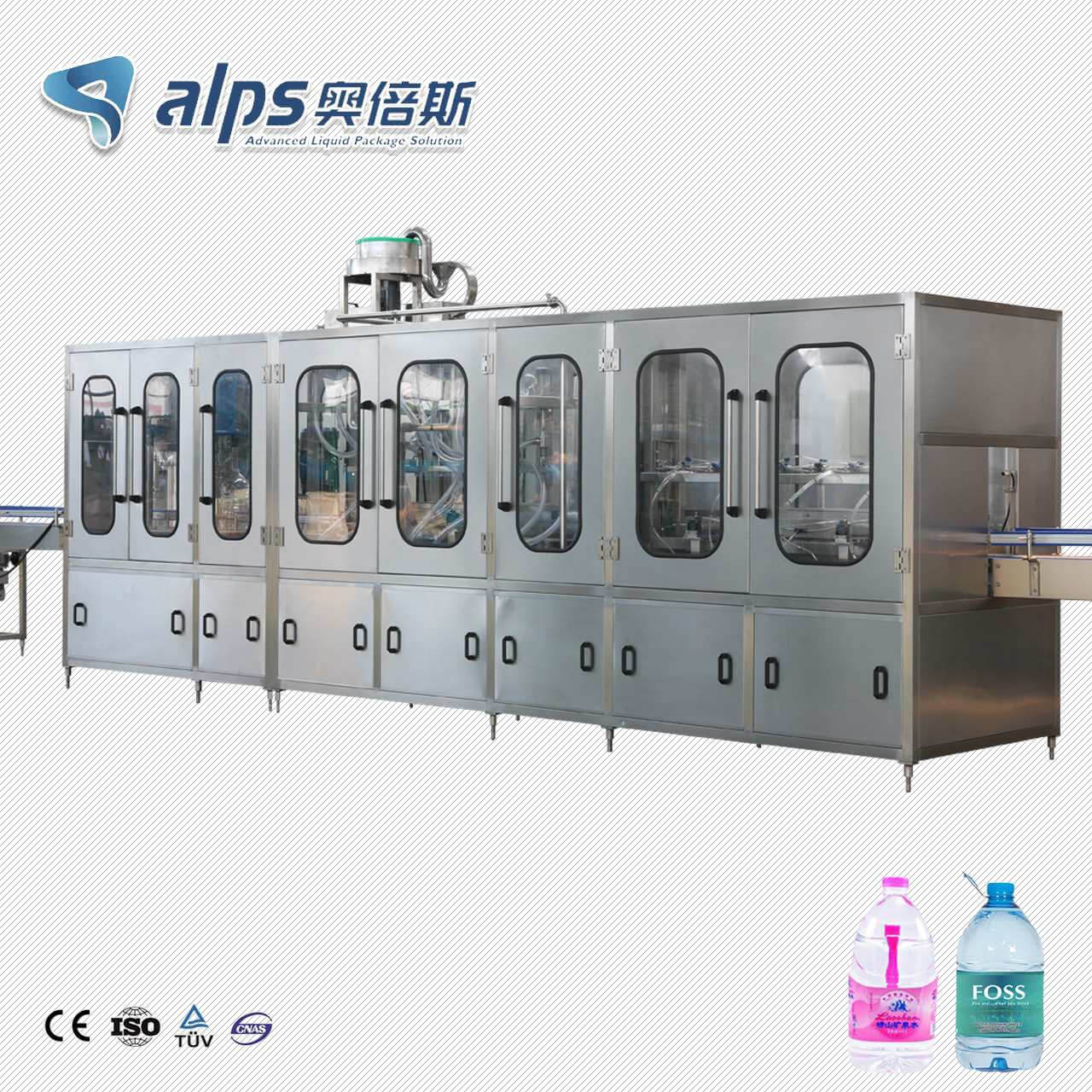
Imagine an empty bottle entering a machine and emerging as a filled, capped product—with no manual handling and no transfer between separate machines. This is the basic idea behind a 3-in-1 water filling machine. Instead of using separate rinsing, filling, and capping machines connected by conveyors and star wheels, a 3-in-1 system integrates all three processes into one complete system. This compact design can reduce equipment footprint, simplify material transfer, and help minimize contamination risks.
Modern 3-in-1 filling machines can handle capacities of 2,000-42,000 bottles per hour for 500 ml bottles, with filling accuracy of up to ±1%. Stainless steel construction, PLC control, and a touchscreen HMI also support stable and automated production.
But how does this integrated system actually work? This guide takes you inside the machine, explaining the complete workflow from bottle rinsing to filling and capping, along with the key technologies behind each stage.
A 3-in-1 filling machine is essentially a rotary integrated system that combines three main sections: rinsing, filling, and capping. These sections are arranged around a rotating platform and connected through star wheels, allowing bottles to move smoothly from one station to the next. Bottles enter from one side and leave as finished, capped products from the other.
The machine is driven by a main motor and gear transmission, while bottles are fed into the system through an air conveyor and transferred between stations by bottle-handling star wheels. Its main features include:
Automatic operation: PLC control with a touchscreen HMI.
Smart functions: No bottle, no filling; cap shortage shutdown; production counting.
Anti-drip filling valves: Help prevent liquid from contaminating bottle mouths.
Magnetic-torque capping heads: Adjustable torque protects caps while ensuring reliable sealing.
Neck-grip conveying: Reduces unnecessary bottle contact and potential secondary contamination.
Rinsing is the first stage after empty bottles enter an integrated water filling machine. Its purpose is to remove dust, microorganisms, and foreign particles that may have accumulated during transportation or storage, creating a cleaner internal surface before filling. The process typically follows these steps:
Step | Action |
1. Infeed | Bottles enter through the air conveyor and star wheel. |
2. Inversion | Bottle grippers hold the neck and rotate bottles 180°. |
3. Rinsing | Nozzles spray sterile water or sanitizer onto the inner walls. |
4. Draining | Bottles remain inverted so water and residues can flow out. |
5. Recovery | Bottles rotate another 180°back to the upright position. |
6. Transfer | Clean bottles move into the filling section. |
The 180°inversion is especially important because gravity helps drain rinse water and loosened contaminants more effectively. Spring-loaded grippers provide stable handling, while nozzle design supports thorough internal coverage. Rinsing time is determined by line speed and hygiene requirements.
After rinsing, clean bottles enter the filling section, the core stage of the combiblock water filling machine. A bottle-handling star wheel transfers each bottle from the rinsing station, while a neck support plate holds it securely as the rotary platform moves.
The filling valve follows a precise sequence:
Valve lowering: The valve moves downward under cam control.
Sealing: It makes contact with the bottle mouth.
Opening: The bottle pushes the valve open.
Filling: The beverage flows into the bottle.
Closing: Filling stops and the valve rises.
Transfer: The bottle moves to the capping section through a neck-gripping transfer wheel.
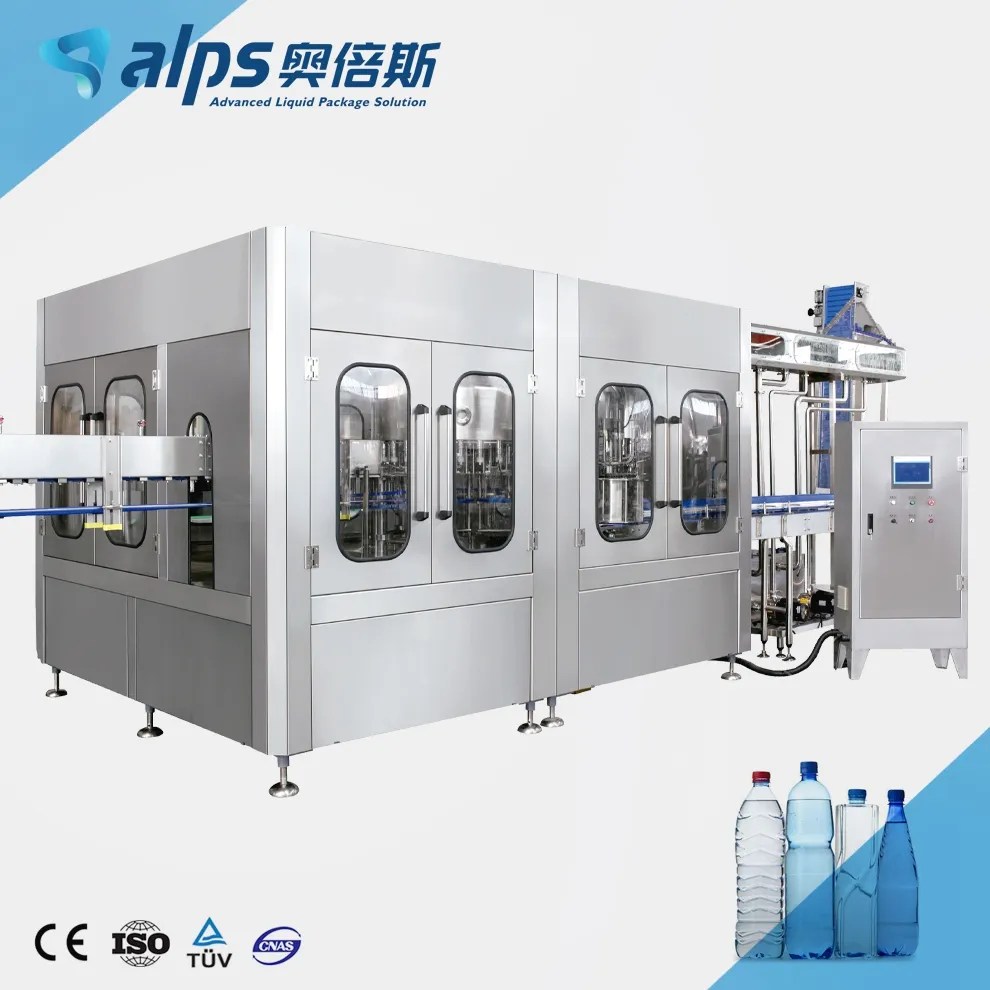
Method | Typical Products | Principle |
Gravity filling | Water, juice | Liquid flows by gravity. |
Micro-negative-pressure filling | Purified water | Pressure difference draws liquid into the bottle. |
Isobaric filling | Carbonated drinks | CO2 equalizes pressure before filling to reduce foaming and carbonation loss. |
The filling method should be selected according to the product's characteristics and production requirements.
Capping is the final stage of the 3-in-1 water filling machine, sealing the bottle to prevent leakage and contamination while protecting product shelf life. After filling, the cap is sorted and delivered to the capping station, where the capping head completes the sealing process.
Cap feeding: The cap sorter organizes and supplies caps.
Cap gripping: The capping head picks up a cap.
Cap placement: The cap is positioned onto the bottle mouth.
Capping: The head rotates to tighten the cap under cam control.
Release: The capping head disengages after tightening.
Bottle holding: A neck stop prevents the bottle from rotating.
The capping head uses an adjustable magnetic torque device to provide consistent tightening without damaging caps. Torque can be adjusted for different cap types and threads, with typical values of 10–15 N·m.
A 3-in-1 water filling machine relies on an integrated control system to coordinate rinsing, filling, and capping with minimal manual intervention. The PLC acts as the machine's control center, managing each operating sequence, while the touchscreen HMI allows operators to set parameters, monitor production, and respond to alarms. A frequency converter enables smooth speed adjustment to match different production requirements.
Smart Function | Purpose |
No bottle, no filling | Stops the filling valve when no bottle is detected |
No bottle, no cap | Prevents cap feeding when no bottle is present |
Cap shortage stop | Stops and alarms the machine when caps run low |
Bottle jam stop | Protects the machine when bottles become blocked |
Production counting | Tracks output in real time |
Overload protection | Automatically stops the machine under overload conditions |
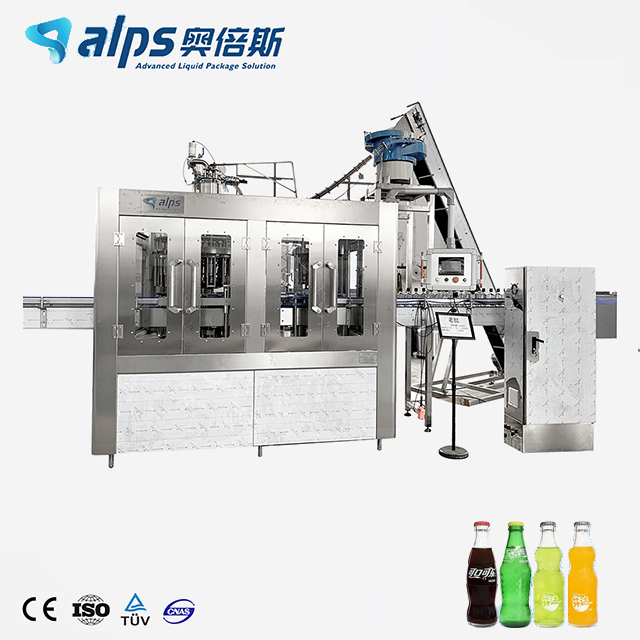
A 3-in-1 filling machine combines rinsing, filling, and capping into one integrated system, bringing several advantages over separate equipment. It reduces intermediate transfers, saves valuable floor space, improves production hygiene, and lowers labor and maintenance costs. Its capacity can also be selected according to production requirements, bottle formats, and factory conditions.
Comparison | Three Separate Machines | 3-in-1 Filling Machine |
Equipment | 3 machines | 1 integrated system |
Floor Space | Larger | More compact |
Product Transfer | Required between machines | Continuous operation |
Labor | Operators for each machine | One operator can manage the system |
Maintenance | Multiple sets of spare parts | One integrated set |
Hygiene Risk | Higher due to transfer points | Lower with enclosed operation |
A 3-in-1 filling machine brings rinsing, filling, and capping together in one continuous system, creating a more efficient, hygienic, and automated bottling process. From 180° bottle inversion during rinsing to precise filling and magnetic-torque capping, each stage is designed to maintain product quality and reliable operation.
For beverage producers looking to build or upgrade a bottling line, Alps Machine provides more than individual equipment. Our portfolio includes water treatment systems, filling machines, CSD and juice lines, labeling and packaging machines, and more. With customized configurations and professional engineering support, Alps Machine is committed to helping customers build efficient, reliable production facilities and win their markets.




By continuing to use the site you agree to our privacy policy Terms and Conditions.