What Is a Combiblock Machine? A Complete Guide for Bottled Water Production

Views: 78 Author: Site Editor Publish Time: Origin: Site
When planning a new bottled water production line, many buyers encounter confusion around terms like combiblock, combiblock machine, water filling machine, and 3-in-1 filling machine. These terms are sometimes used interchangeably by suppliers, but they can represent different levels of equipment integration, automation, and scope. Misunderstanding these distinctions can lead to unexpected costs, inefficient layouts, or mismatched production capabilities.
Different manufacturers may define a combiblock differently. One supplier might describe it as a blow-fill-cap system starting from PET preforms, while another might use the same term for a rinser-filler-capper monoblock that handles empty bottles. In some cases, the term combiblock is applied to the core machine within a complete water filling line. Understanding these nuances helps buyers accurately compare quotations and evaluate whether the proposed solution meets their production needs.
This guide aims to clarify what a combiblock is, how it functions within a bottled water production line, and when it is appropriate to select one over a modular or full water filling system. Many buyers also confuse a combiblock with a complete water filling line. If you want to understand the broader difference between these two terms, you can read our guide on combiblock vs water filling line.

What Is a Combiblock Machine?

A combiblock machine is an integrated equipment system that combines several key production steps into one synchronized unit. In bottled water production, a combiblock is usually designed to handle blowing, filling, and capping, or rinsing, filling, and capping. Instead of moving bottles through several separate machines, the combiblock connects these processes more closely to improve line stability and reduce unnecessary bottle handling.

However, a combiblock is not always the same as a complete water filling line. It is usually the core machine block inside the production system. A full line may still require water treatment, labeling, coding, packing, conveyors, inspection equipment, and utility systems. For a more detailed comparison of equipment scope, see our article on the difference between a combiblock and a water filling line.
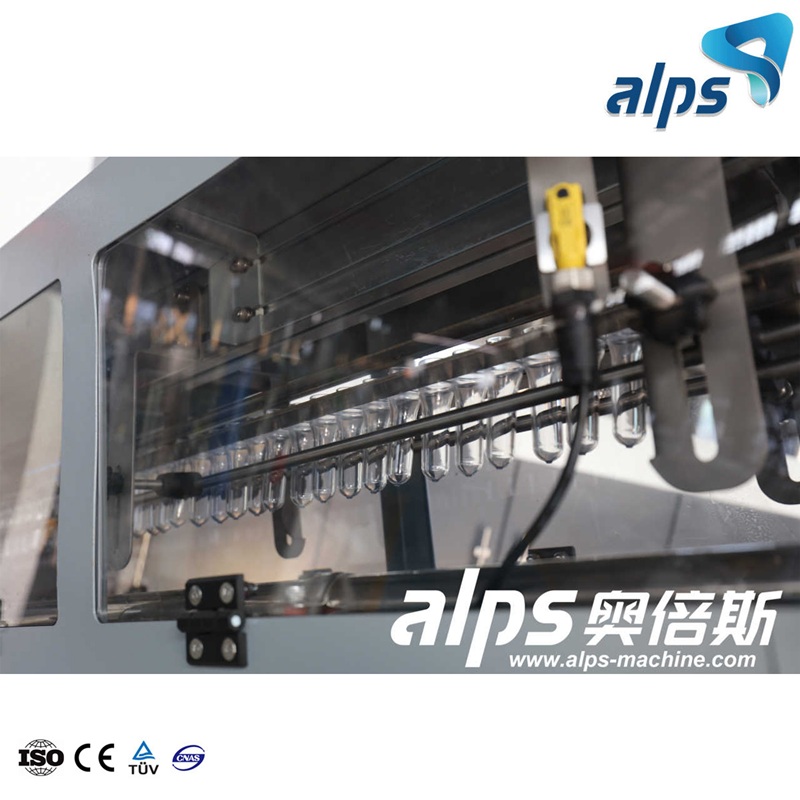
Combiblock with PET Preforms – Heating and Blowing Section in Water Bottling Line

Combiblock in Bottled Water Production

In a bottled water plant, the combiblock is usually placed in the central production area. If it is a blow-fill-cap combiblock, PET preforms enter the system, are blown into bottles, filled with treated water, and capped in one integrated process.
If the system starts from empty bottles, the combiblock may focus on rinsing, filling, and capping. After capping, the bottles usually move to downstream equipment such as labeling machines, date coders, inspection systems, shrink wrappers, carton packers, or palletizers.

Combiblock Machine vs Water Filling Machine

A standard water filling machine often refers to the filling section or a rinser-filler-capper unit. It mainly handles empty bottles and completes the washing, filling, and capping process.
A combiblock filling machine places more emphasis on integration and synchronization. It may combine bottle forming and filling in one block, or connect multiple core processes with fewer transfer points. This makes the combiblock especially useful for bottled water producers who want a compact layout, stable operation, and a clearer production flow.

Main Types of Combiblock Machines for Bottled Water

The term combiblock can refer to different types of integrated machinery, depending on the supplier and production needs. Understanding the main types helps buyers determine which system is suitable for their bottled water plant and prevents confusion when comparing quotations or planning layouts. Generally, there are two common types used in the industry: the Blow Fill Cap Combiblock and the Rinser-Filler-Capper Combiblock. Each has distinct processes, starting points, and equipment requirements, which directly affect automation level, plant layout, and cost.

Blow Fill Cap Combiblock

A Blow Fill Cap Combiblock typically begins with PET preforms. The system first heats and molds the preforms into bottles, then fills them with treated water, and finally applies the caps in one integrated block. This design reduces the need for transporting empty bottles between separate machines, minimizing the risk of bottle deformation and contamination. Blow Fill Cap Combiblocks are well-suited for new PET bottled water plants that prioritize high automation, compact layout, and continuous stable production. They are often the choice for plants with clearly defined bottle sizes and high output targets.

Rinser-Filler-Capper Combiblock

In contrast, a Rinser-Filler-Capper Combiblock starts with empty bottles. The machine first rinses each bottle to remove dust or residues, then fills it with water, and finally caps it. This type of combiblock is commonly found in small to medium-sized bottled water plants or facilities that already have a separate bottle blowing system. The simplicity of starting from empty bottles makes it easier to operate and maintain while still integrating core production steps efficiently. This configuration is often more cost-effective and flexible for plants with lower automation requirements or variable production demands.

Why the Type Changes Cost, Layout and Utility Requirements

The choice between these combiblock types has a significant impact on project planning. Systems that include bottle blowing require molds, high-pressure compressed air, and careful preform handling, which increases both equipment cost and utility needs. A Rinser-Filler-Capper setup may have lower initial investment and simpler utility demands but requires sourcing empty bottles externally. Buyers should not rely solely on the term “combiblock” when comparing quotes; it is essential to confirm the exact processes included, starting points, and compatibility with the plant layout to ensure accurate budgeting and efficient production flow.

How Does a Combiblock Machine Work?

A combiblock machine integrates multiple production steps into a single synchronized system. Its workflow varies depending on the type of combiblock being used. A blow fill cap combiblock starts from PET preforms, while a rinser-filler-capper combiblock begins with empty bottles. Both types aim to reduce bottle transfers, improve stability, and enhance production efficiency in bottled water operations.

Step 1: Preform or Bottle Feeding

In a blow fill cap combiblock, PET preforms are automatically fed into the system, ready to be heated and blown into bottles. In a rinser-filler-capper combiblock, empty bottles enter directly from a bottle blower or supplier. This initial step affects plant layout, upstream equipment, and storage planning.

Step 2: Bottle Blowing or Rinsing

For blow fill cap systems, preforms are molded into bottles using heat and compressed air, directly linking bottle formation with filling and capping. In rinser-filler-capper systems, bottles are first rinsed to remove dust or residues, which is crucial for maintaining the clear taste and hygiene of bottled water.

Step 3: Water Filling

Bottles proceed to the filling section, where treated water is dispensed accurately into each container. Filling valves ensure stable liquid levels while minimizing splashing and product contact. Food-grade materials and hygienic design prevent contamination during continuous operation.

Step 4: Cap Sorting and Capping

Caps are sorted and delivered to the capping section automatically. The machine places and tightens each cap with controlled torque, preventing leaks and ensuring consumer-friendly opening. Proper capping also reduces rejects in downstream inspection.

Step 5: Connection with Labeling and Packaging

After capping, bottles move to downstream equipment for labeling, date coding, inspection, shrink wrapping, carton packing, or palletizing. Matching speeds between the combiblock and downstream machines is critical; otherwise, production efficiency may be limited. Planning the combiblock as part of the full production line ensures smooth and stable operations.
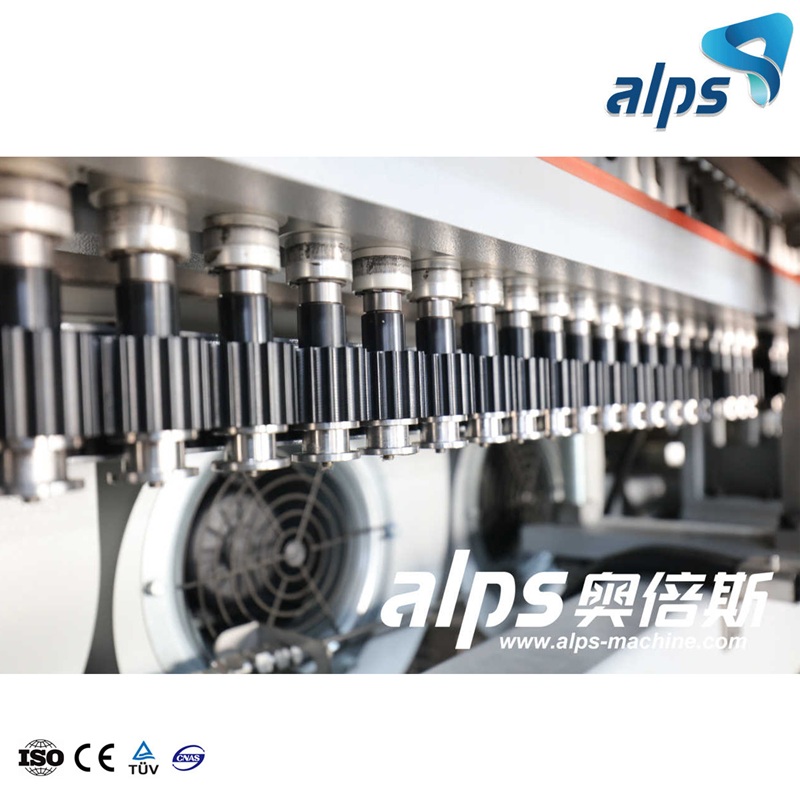
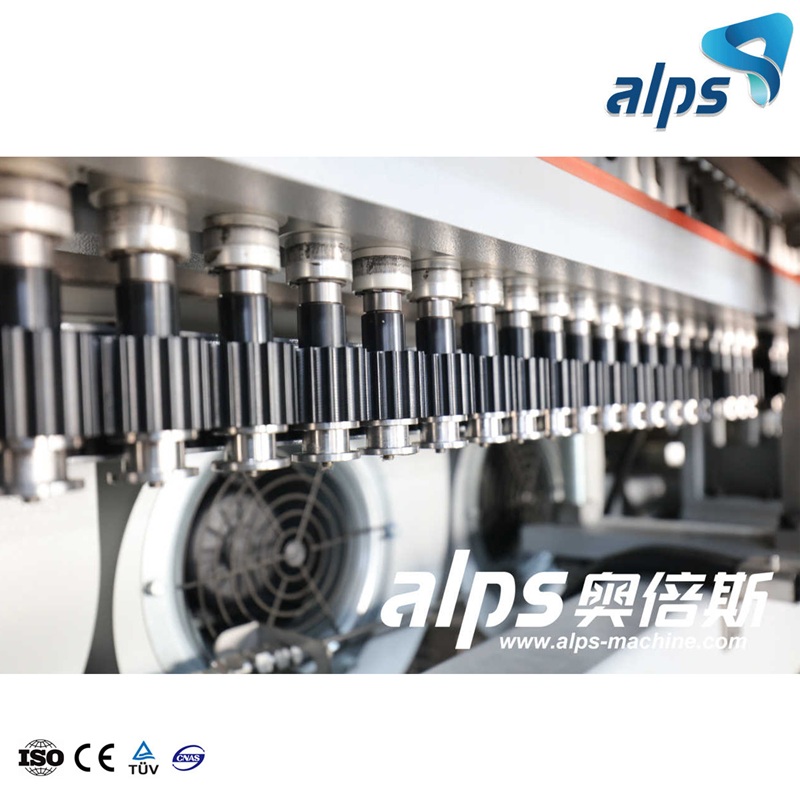
Combiblock Machine – Precision Gears and Filling Heads in Action

Advantages and Limitations of a Combiblock Machine

A combiblock machine offers several advantages for bottled water production, making it an attractive option for plants seeking compact, automated, and efficient operations. Its design integrates multiple production steps, which reduces unnecessary bottle transfers and streamlines workflow. This integration helps maintain consistent production speeds and minimizes the risk of bottle damage or contamination. For plants producing standard PET bottles, a combiblock can provide a reliable, continuous output with fewer manual interventions, saving both time and labor costs.

Main Advantages for Bottled Water Plants

The primary benefits of a combiblock machine include a more compact factory layout, as several processes are combined into a single block, requiring less floor space compared to separate machines. It reduces the number of transfer points, minimizing bottle handling and the chance of accidents or product quality issues. Automation and synchronized operations are enhanced, ensuring smoother workflow between blowing, filling, and capping. Overall, these features make the system particularly well-suited for stable, high-volume PET bottled water production, where efficiency and consistency are critical.

Main Limitations Buyers Should Know

Despite its advantages, a combiblock machine is not a complete production line by itself. It may not include water treatment, labeling, packing, or conveyor systems, which must be integrated separately. Buyers must carefully consider pre-installation planning for bottle design, capacity requirements, and factory layout, as these factors significantly impact the machine's performance. Additionally, combiblocks may lack flexibility for plants handling multiple bottle types, unusual shapes, or frequent product changeovers, making modular or separated systems potentially more suitable for highly varied production needs.

Combiblock Machine vs Traditional Separated Machines

A combiblock machine and a traditional separated machine layout can both be used in bottled water production, but they serve different project needs. The key difference is how the main processes are arranged. A combiblock brings several steps into one integrated system, while separated machines divide production into individual units connected by conveyors.
Comparison PointCombiblock MachineTraditional Separated Machines
IntegrationHigher integrationLower integration
Factory spaceMore compactRequires more line space
FlexibilityBetter for stable bottle typesBetter for multiple formats
Investment styleHigher initial planning requirementEasier step-by-step investment
OperationMore synchronizedMore dependent on line balancing

Integration and Space Requirement

A combiblock usually has a higher level of integration because blowing, filling, and capping, or rinsing, filling, and capping, are connected within one system. This reduces the need for long bottle conveyors and accumulation tables.
Traditional separated machines require more transfer points between each process. This layout may need more floor space, but it can also make each machine easier to access, replace, or adjust separately.

Flexibility and Changeover

A combiblock is often more suitable for bottled water plants with stable PET bottle sizes and clear production targets. If your main products are standard bottles such as 500 ml or 1.5 L, this integrated setup can improve production flow.
Separated machines may be a better choice when the plant handles many bottle shapes, capacities, cap types, or packaging formats. They usually offer more flexibility for frequent changeovers and future equipment upgrades.

Investment and Long-Term Operation

A combiblock may require higher upfront investment and more careful early planning, especially if bottle blowing is included. However, its automation and synchronization can help reduce manual handling and improve long-term efficiency.
Separated machines may be easier for small or growing factories that want to invest step by step. The best choice is not always the most integrated system, but the one that matches your capacity, budget, bottle design, and expansion plan.

When Should You Choose a Combiblock for Bottled Water Production?

Choosing the right production system depends on your plant's specific needs and long-term goals. A combiblock machine is ideal when you have a new PET bottled water plant, stable bottle sizes and capacities, and a clear plan for automation and production targets. Its compact design helps optimize factory layout, reduce unnecessary bottle handling, and streamline operations for a consistent and efficient workflow.

Suitable Situations for a Combiblock Machine

A combiblock works best when production involves standardized PET bottles, such as 500 ml or 1.5 L, and when the plant aims for high automation with minimal manual intervention. This system is also suitable for facilities with clearly defined capacity goals and budget plans, as its integrated processes require careful pre-installation planning.

When a Modular Water Filling Line May Be Better

A modular or separated water filling line may be preferable if your plant handles multiple bottle sizes, shapes, or packaging formats. It is also better suited for facilities that already have separate equipment such as bottle blowers, labeling machines, or packing systems. Modular setups allow for phased investment and more flexible future expansion, accommodating changes in production needs without requiring a complete line overhaul.

What to Check Before Buying a Combiblock Machine

When evaluating a combiblock machine, it is essential to confirm the full scope of the equipment. Some machines start with PET preforms for blow-fill-cap operations, while others begin with empty bottles for rinsing, filling, and capping. Understanding which processes are included in the quotation ensures that you are comparing similar systems and avoids unexpected additional costs.

Confirm the Machine Scope

Check whether the combiblock includes all core steps—blowing, rinsing, filling, and capping. Determine the starting point of the system, as this will impact your upstream requirements, including preform storage or empty bottle handling.

Confirm Bottle, Cap and Capacity Requirements

Verify that the machine supports your specific bottle size, shape, neck finish, and cap type. Also confirm target capacity and bottles per hour (BPH). If your plant plans to switch between different bottle formats, ensure the system can accommodate changeovers efficiently.

Confirm Utility and Factory Layout Requirements

Review all utility requirements such as electricity, compressed air, water supply, and drainage. Consider space for the machine, maintenance access, and any additional support for molds or specialized bottle designs. Proper planning ensures the combiblock fits seamlessly into your factory layout.

Confirm Downstream Equipment and Service Scope

Ensure that downstream processes are accounted for, including labeling, coding, inspection, packing, and conveyors. Confirm whether installation, operator training, spare parts, warranty, and after-sales service are included. A complete understanding of these elements guarantees that your combiblock machine meets both production and operational expectations.
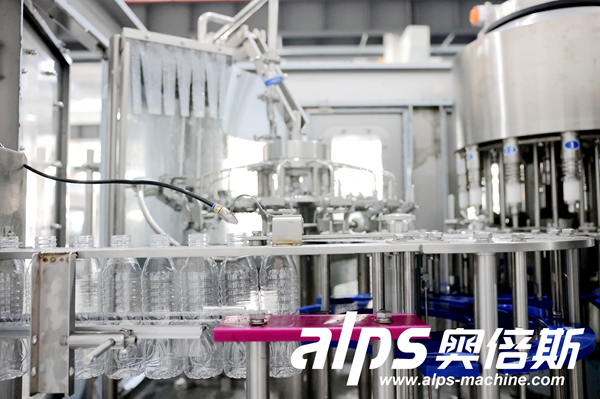
Water Production Line – PET Bottles on Conveyor Before Capping

FAQ About Combiblock Machines

What is a combiblock machine?

A combiblock machine is an integrated system that combines several key production steps, such as rinsing, filling, and capping, into one synchronized unit. Some combiblock machines also include bottle blowing, creating a seamless workflow from preforms to finished bottles.

Is a combiblock the same as a water filling machine?

Not exactly. While a water filling machine focuses on filling liquids into bottles, a combiblock machine integrates multiple stages including filling, capping, and sometimes bottle formation. This integration helps streamline production and reduces the need for multiple separate machines.

What is a blow fill cap combiblock?

A blow fill cap combiblock starts with PET preforms, blows them into bottles, fills them with water, and caps them in a single system. It is commonly used in high-automation bottled water plants to ensure consistent output and reduce manual handling.

Does every combiblock include bottle blowing?

No, not all combiblocks have bottle blowing. Some start from empty bottles and only handle rinsing, filling, and capping. It is essential to confirm the machine scope before purchase to avoid unexpected gaps in production capability.

Is a combiblock suitable for small bottled water plants?

Yes, combiblock machines can be suitable for small plants if the production requirements align with a single integrated workflow. However, smaller plants with multiple bottle sizes or frequent product changes might benefit from a modular or separated line for greater flexibility.

What should I check before buying a combiblock filling machine?

Before purchasing, confirm the machine scope, supported bottle sizes, capacity, utility requirements, and downstream equipment compatibility. Ensure that installation, training, spare parts, and after-sales support are included to maintain efficient operation.

Conclusion: Choose a Combiblock Based on Real Production Needs

Selecting the right combiblock machine depends on your specific production requirements. Consider the type of combiblock, whether it includes blowing, rinsing, filling, and capping, and how it fits within your factory layout. Understanding the machine's scope, advantages, limitations, and suitability for your bottle sizes and target capacity ensures you make an informed investment. Before finalizing a purchase, evaluate your packaging needs and production goals to choose a combiblock that delivers efficiency, consistency, and long-term value. Taking the time to match your equipment with real production demands helps avoid costly mistakes and maximizes operational performance.

<span data-lark-record-data="{"isCut":false,"rootId":"SEwVdmErTopWEKx4RzMc5svanq6","parentId":"SEwVdmErTopWEKx4RzMc5svanq6","blockIds":[2,3,4,5,6,7,8,9,10,11,12,13,14,15,16,17,18,19,20,21,22,23,24,25,26,27,28,29,30,31,32,33,34,35,36,37,38,39,40,41,42,43,44,45,46,47,48,49,50,51,52,53,54,55,56,57,58,59,60,61,62,63,64,65,66,67,68,69,70,71,72,73,74,75,76,77,78,79,80,81,82],"recordIds":["MN5BdVaQFo9DBZxDLN0cikDhnJd","EFsndVUm7oeIHJxv2V2co8yvnVb","GWOadctIDo5CBLxGdx4cmhJunRd","HjijdbkzXojcxsxeiv1cZOxAnTb","ViTNdnVdmogA1UxgRZrchHeinnh","Riz6dNCmnoaEskx2WFXcSQCunTc","UQAadFqlSouuQ6xwau0cmUzYndb","X0lkda3XTogKwlxplhQcxXk2nzc","D93SdU92joJKPTxve8UcuPsvn1d","ME1Sdd1oEopbZmxWpcvcc1v5nVz","Dnnzd9EQZoEN9uxz37zcd2sfnAc","ZAqJddxOSowxV3xEaTucVOqOncb","CRXQdOXocozfySxd1YQcYLYknAc","PHE8dCC15oZ34gxlapKcdFIknzd","TEmod6K3Jo7seWxLDMEcefsOnPc","M5MqdQ7o2o9pygxR910cYkxsntf","LV24doabbolQVaxZgyEcmOJLnrB","D36cdkmgeoMRC8xfyzvcPrJPn2b","VxZWdRc0VoVs89xj819cot5anue","YNnIdk3A8ojRRfxb7YnchGgvniC","SidBduVakos2gSxaAgxccL3Rnfh","SKE6dWMKUoWNHExVGGacL7kPnTg","Edvrd2thpoMDBIxaOFocmdVsn5d","U9E7dJFnEor6uQxi6n3cCQqnn4g","CWEmdrsUdoCHa4xvEwMcBtrtn1e","DTqcdFK2qovirLxBKz4cWRwdn4c","MXSwdShCPoyjnXxDnUkc7AOsnn3","L25UdToYho9zhjxQEFecb0cOnsb","RjYCdFgweo4OBhxNZYKcTrwFnfb","UUdPd0iB8oCbQGxi8sccgtaWnnc","Ks5VdZEXUoji2kx6HqfcdUN4nXb","JRKKdvn78ohDHaxgvD3chxIln6f","QLgAdn08goRDuvxlTLucBXPhnQb","Jux1dBFS4ocidjxxHHVcNjXKnWb","DKCxdbU71o4HKUxs1I9cC0flnIh","SpJwdfIa1ohFzqxhfRMcHTaInJf","Gt9YdgWr5oeIkPxB1A7cSkE7nsb","W5Ydd4b05oClKaxaPG3cdrm8nrd","C16AdZtaIozwyCxtK25cTpAnnBd","Iup5dewofobG5Cxxmy5cLxvrnwh","DAwjdTPVKoZ4zex4vIucpeGTnSb","NM1TdYHtRo7pE1x3Bl5cKqOynEr","GrAGdkbqRozfflxyTq0cVbiVnUj","BWhoddQj5okdD3xLP7IcFr6XnVg","EOUjdhwUroThKJxJYiUcZbrGnSd","WUkxdKs4PoyuDtxcf0OcTtFGnPc","Itq5dgSqroX8W8xACCdcMNycnXb","HFHldqpY3ojuYcxFXB0cB0dKnTb","LJR6dLLqnonG6qxumtkcZolznDd","ThmzdahNno5CzsxNoGTcGE5Nnje","XOwWd1zbxotBYbxbX4qclP7vnae","LIpedu3AKotyWexpd8IciA6Cnrh","XZiNdbeicolHeFxnRHWcoekpnnd","PPYzds9X1oFc9DxCjR2clmd3nRf","HvKXdpfh0oQ9SZxI0iCcSsVvnnf","XkXwdp8Kio65ebxgsVhcAI5onxe","OtVydqm65oavcsx9TgNcSgavnKg","KC6GdCIisoE0W1xYVf3cNvVEncc","Cq3VdOv7Lo5mlrxIvZpc5sstn7g","PVsrdhwy4oh61lx0peNcioHKnZe","M8KPdnLEJoY1GCxTeSHcT9hBnOd","OplzdeYX7oeaMYxlEincjNZwn2f","OtOKdUVNrogV8sxVfgDcdLAhnyb","AlyJdTFKCoEcQ8xzXbicHOS8nTe","ShhEdQUTHonJnGxM1yncv0tSneS","RM5WdHxaToAQ17x43FacOcrynTh","COXfdAc0Bo9WRUxRsnQcvHUynjf","U5e3dJEwvon5izxd7qAcqPX9nRb","PfwmdystloEsBDxhGAjcVs3En9g","ZMhRdhkwXosMOmxxYEtccu92ndc","EUHJd2F7xoly88xi2VFcC9QMnCQ","DgRndUedfohQGbxBOYNc8dv8nWc","Byo4d63Bio2uKRxhLxmc1NZSnwu","AVuWdBBwUoIArYxnrIzc0YDRn8c","Sj70dLnLMoeSd9xolnccdsPKnAb","HLCddsYwIoEtHix45O1c8oponCb","Kig1dcCMmoOSCHxtLlucd9WRnyh","EMyQdyQw8oyFI7xeWChcLGOOnsd","J5xgdjItjo5VwkxhyRUcS0WEnbb","NFfgdVBh4oZqyYxhObOce5u4nvb","NhdOdTMxKo95syx1oIrckQd9nqo"],"recordMap":{"MN5BdVaQFo9DBZxDLN0cikDhnJd":{"id":"MN5BdVaQFo9DBZxDLN0cikDhnJd","snapshot":{"type":"text","parent_id":"SEwVdmErTopWEKx4RzMc5svanq6","comments":[],"revisions":[],"locked":false,"hidden":false,"author":"7567269984633044994","children":[],"text":{"initialAttributedTexts":{"text":{"0":"When planning a new bottled water production line, many buyers encounter confusion around terms like combiblock, combiblock machine, water filling machine, and 3-in-1 filling machine. These terms are sometimes used interchangeably by suppliers, but they can represent different levels of equipment integration, automation, and scope. Misunderstanding these distinctions can lead to unexpected costs, inefficient layouts, or mismatched production capabilities."},"attribs":{"0":"*0+2t*0*1+a*0+2*0*1+i*0+2*0*1+l*0+6*0*1+m*0+7p"}},"apool":{"numToAttrib":{"0":["author","7567269984633044994"],"1":["bold","true"]},"nextNum":2}},"align":"","folded":false}},"EFsndVUm7oeIHJxv2V2co8yvnVb":{"id":"EFsndVUm7oeIHJxv2V2co8yvnVb","snapshot":{"type":"text","parent_id":"SEwVdmErTopWEKx4RzMc5svanq6","comments":[],"revisions":[],"locked":false,"hidden":false,"author":"7567269984633044994","children":[],"text":{"apool":{"nextNum":1,"numToAttrib":{"0":["author","7567269984633044994"]}},"initialAttributedTexts":{"attribs":{"0":"*0+ds"},"text":{"0":"Different manufacturers may define a combiblock differently. One supplier might describe it as a blow-fill-cap system starting from PET preforms, while another might use the same term for a rinser-filler-capper monoblock that handles empty bottles. In some cases, the term combiblock is applied to the core machine within a complete water filling line. Understanding these nuances helps buyers accurately compare quotations and evaluate whether the proposed solution meets their production needs."}}},"align":"","folded":false}},"GWOadctIDo5CBLxGdx4cmhJunRd":{"id":"GWOadctIDo5CBLxGdx4cmhJunRd","snapshot":{"type":"text","parent_id":"SEwVdmErTopWEKx4RzMc5svanq6","comments":[],"revisions":[],"locked":false,"hidden":false,"author":"7567269984633044994","children":[],"text":{"apool":{"nextNum":3,"numToAttrib":{"0":["author","7567269984633044994"],"1":["bold","true"],"2":["textHighlight","rgb(36,91,219)"]}},"initialAttributedTexts":{"attribs":{"0":"*0+y*0*1+a*0+8y*0*1*2+w*0+1"},"text":{"0":"This guide aims to clarify what a combiblock is, how it functions within a bottled water production line, and when it is appropriate to select one over a modular or full water filling system. Many buyers also confuse a combiblock with a complete water filling line. If you want to understand the broader difference between these two terms, you can read our guide on combiblock vs water filling line."}}},"align":"","folded":false}},"HjijdbkzXojcxsxeiv1cZOxAnTb":{"id":"HjijdbkzXojcxsxeiv1cZOxAnTb","snapshot":{"type":"heading2","parent_id":"SEwVdmErTopWEKx4RzMc5svanq6","comments":[],"revisions":[],"locked":false,"hidden":false,"author":"7567269984633044994","children":[],"text":{"apool":{"nextNum":1,"numToAttrib":{"0":["author","7567269984633044994"]}},"initialAttributedTexts":{"attribs":{"0":"*0+t"},"text":{"0":"What Is a Combiblock Machine?"}}},"align":"","folded":false}},"ViTNdnVdmogA1UxgRZrchHeinnh":{"id":"ViTNdnVdmogA1UxgRZrchHeinnh","snapshot":{"type":"text","parent_id":"SEwVdmErTopWEKx4RzMc5svanq6","comments":[],"revisions":[],"locked":false,"hidden":false,"author":"7567269984633044994","children":[],"text":{"apool":{"nextNum":2,"numToAttrib":{"0":["author","7567269984633044994"],"1":["bold","true"]}},"initialAttributedTexts":{"attribs":{"0":"*0+2*0*1+i*0+bq"},"text":{"0":"A combiblock machine is an integrated equipment system that combines several key production steps into one synchronized unit. In bottled water production, a combiblock is usually designed to handle blowing, filling, and capping, or rinsing, filling, and capping. Instead of moving bottles through several separate machines, the combiblock connects these processes more closely to improve line stability and reduce unnecessary bottle handling."}}},"align":"","folded":false}},"Riz6dNCmnoaEskx2WFXcSQCunTc":{"id":"Riz6dNCmnoaEskx2WFXcSQCunTc","snapshot":{"type":"text","parent_id":"SEwVdmErTopWEKx4RzMc5svanq6","comments":[],"revisions":[],"locked":false,"hidden":false,"author":"7567269984633044994","children":[],"text":{"apool":{"nextNum":3,"numToAttrib":{"0":["author","7567269984633044994"],"1":["bold","true"],"2":["textHighlight","rgb(36,91,219)"]}},"initialAttributedTexts":{"attribs":{"0":"*0+9o*0*1*2+1k*0+1"},"text":{"0":"However, a combiblock is not always the same as a complete water filling line. It is usually the core machine block inside the production system. A full line may still require water treatment, labeling, coding, packing, conveyors, inspection equipment, and utility systems. For a more detailed comparison of equipment scope, see our article on the difference between a combiblock and a water filling line."}}},"align":"","folded":false}},"UQAadFqlSouuQ6xwau0cmUzYndb":{"id":"UQAadFqlSouuQ6xwau0cmUzYndb","snapshot":{"type":"heading3","parent_id":"SEwVdmErTopWEKx4RzMc5svanq6","comments":[],"revisions":[],"locked":false,"hidden":false,"author":"7567269984633044994","children":[],"text":{"apool":{"nextNum":1,"numToAttrib":{"0":["author","7567269984633044994"]}},"initialAttributedTexts":{"attribs":{"0":"*0+12"},"text":{"0":"Combiblock in Bottled Water Production"}}},"align":"","folded":false}},"X0lkda3XTogKwlxplhQcxXk2nzc":{"id":"X0lkda3XTogKwlxplhQcxXk2nzc","snapshot":{"type":"text","parent_id":"SEwVdmErTopWEKx4RzMc5svanq6","comments":[],"revisions":[],"locked":false,"hidden":false,"author":"7567269984633044994","children":[],"text":{"apool":{"nextNum":1,"numToAttrib":{"0":["author","7567269984633044994"]}},"initialAttributedTexts":{"attribs":{"0":"*0+6v"},"text":{"0":"In a bottled water plant, the combiblock is usually placed in the central production area. If it is a blow-fill-cap combiblock, PET preforms enter the system, are blown into bottles, filled with treated water, and capped in one integrated process."}}},"align":"","folded":false}},"D93SdU92joJKPTxve8UcuPsvn1d":{"id":"D93SdU92joJKPTxve8UcuPsvn1d","snapshot":{"type":"text","parent_id":"SEwVdmErTopWEKx4RzMc5svanq6","comments":[],"revisions":[],"locked":false,"hidden":false,"author":"7567269984633044994","children":[],"text":{"apool":{"nextNum":1,"numToAttrib":{"0":["author","7567269984633044994"]}},"initialAttributedTexts":{"attribs":{"0":"*0+7k"},"text":{"0":"If the system starts from empty bottles, the combiblock may focus on rinsing, filling, and capping. After capping, the bottles usually move to downstream equipment such as labeling machines, date coders, inspection systems, shrink wrappers, carton packers, or palletizers."}}},"align":"","folded":false}},"ME1Sdd1oEopbZmxWpcvcc1v5nVz":{"id":"ME1Sdd1oEopbZmxWpcvcc1v5nVz","snapshot":{"type":"heading3","parent_id":"SEwVdmErTopWEKx4RzMc5svanq6","comments":[],"revisions":[],"locked":false,"hidden":false,"author":"7567269984633044994","children":[],"text":{"apool":{"nextNum":1,"numToAttrib":{"0":["author","7567269984633044994"]}},"initialAttributedTexts":{"attribs":{"0":"*0+17"},"text":{"0":"Combiblock Machine vs Water Filling Machine"}}},"align":"","folded":false}},"Dnnzd9EQZoEN9uxz37zcd2sfnAc":{"id":"Dnnzd9EQZoEN9uxz37zcd2sfnAc","snapshot":{"type":"text","parent_id":"SEwVdmErTopWEKx4RzMc5svanq6","comments":[],"revisions":[],"locked":false,"hidden":false,"author":"7567269984633044994","children":[],"text":{"apool":{"nextNum":1,"numToAttrib":{"0":["author","7567269984633044994"]}},"initialAttributedTexts":{"attribs":{"0":"*0+59"},"text":{"0":"A standard water filling machine often refers to the filling section or a rinser-filler-capper unit. It mainly handles empty bottles and completes the washing, filling, and capping process."}}},"align":"","folded":false}},"ZAqJddxOSowxV3xEaTucVOqOncb":{"id":"ZAqJddxOSowxV3xEaTucVOqOncb","snapshot":{"type":"text","parent_id":"SEwVdmErTopWEKx4RzMc5svanq6","comments":[],"revisions":[],"locked":false,"hidden":false,"author":"7567269984633044994","children":[],"text":{"apool":{"nextNum":1,"numToAttrib":{"0":["author","7567269984633044994"]}},"initialAttributedTexts":{"attribs":{"0":"*0+9s"},"text":{"0":"A combiblock filling machine places more emphasis on integration and synchronization. It may combine bottle forming and filling in one block, or connect multiple core processes with fewer transfer points. This makes the combiblock especially useful for bottled water producers who want a compact layout, stable operation, and a clearer production flow."}}},"align":"","folded":false}},"CRXQdOXocozfySxd1YQcYLYknAc":{"id":"CRXQdOXocozfySxd1YQcYLYknAc","snapshot":{"type":"heading2","parent_id":"SEwVdmErTopWEKx4RzMc5svanq6","comments":[],"revisions":[],"locked":false,"hidden":false,"author":"7567269984633044994","children":[],"text":{"apool":{"nextNum":1,"numToAttrib":{"0":["author","7567269984633044994"]}},"initialAttributedTexts":{"attribs":{"0":"*0+1f"},"text":{"0":"Main Types of Combiblock Machines for Bottled Water"}}},"align":"","folded":false}},"PHE8dCC15oZ34gxlapKcdFIknzd":{"id":"PHE8dCC15oZ34gxlapKcdFIknzd","snapshot":{"type":"text","parent_id":"SEwVdmErTopWEKx4RzMc5svanq6","comments":[],"revisions":[],"locked":false,"hidden":false,"author":"7567269984633044994","children":[],"text":{"apool":{"nextNum":2,"numToAttrib":{"0":["author","7567269984633044994"],"1":["bold","true"]}},"initialAttributedTexts":{"attribs":{"0":"*0+9*0*1+a*0+9k*0*1+o*0+9*0*1+v*0+3v"},"text":{"0":"The term combiblock can refer to different types of integrated machinery, depending on the supplier and production needs. Understanding the main types helps buyers determine which system is suitable for their bottled water plant and prevents confusion when comparing quotations or planning layouts. Generally, there are two common types used in the industry: the Blow Fill Cap Combiblock and the Rinser-Filler-Capper Combiblock. Each has distinct processes, starting points, and equipment requirements, which directly affect automation level, plant layout, and cost."}}},"align":"","folded":false}},"TEmod6K3Jo7seWxLDMEcefsOnPc":{"id":"TEmod6K3Jo7seWxLDMEcefsOnPc","snapshot":{"type":"heading3","parent_id":"SEwVdmErTopWEKx4RzMc5svanq6","comments":[],"revisions":[],"locked":false,"hidden":false,"author":"7567269984633044994","children":[],"text":{"apool":{"nextNum":1,"numToAttrib":{"0":["author","7567269984633044994"]}},"initialAttributedTexts":{"attribs":{"0":"*0+o"},"text":{"0":"Blow Fill Cap Combiblock"}}},"align":"","folded":false}},"M5MqdQ7o2o9pygxR910cYkxsntf":{"id":"M5MqdQ7o2o9pygxR910cYkxsntf","snapshot":{"type":"text","parent_id":"SEwVdmErTopWEKx4RzMc5svanq6","comments":[],"revisions":[],"locked":false,"hidden":false,"author":"7567269984633044994","children":[],"text":{"apool":{"nextNum":2,"numToAttrib":{"0":["author","7567269984633044994"],"1":["bold","true"]}},"initialAttributedTexts":{"attribs":{"0":"*0+2*0*1+o*0+gc"},"text":{"0":"A Blow Fill Cap Combiblock typically begins with PET preforms. The system first heats and molds the preforms into bottles, then fills them with treated water, and finally applies the caps in one integrated block. This design reduces the need for transporting empty bottles between separate machines, minimizing the risk of bottle deformation and contamination. Blow Fill Cap Combiblocks are well-suited for new PET bottled water plants that prioritize high automation, compact layout, and continuous stable production. They are often the choice for plants with clearly defined bottle sizes and high output targets."}}},"align":"","folded":false}},"LV24doabbolQVaxZgyEcmOJLnrB":{"id":"LV24doabbolQVaxZgyEcmOJLnrB","snapshot":{"type":"heading3","parent_id":"SEwVdmErTopWEKx4RzMc5svanq6","comments":[],"revisions":[],"locked":false,"hidden":false,"author":"7567269984633044994","children":[],"text":{"apool":{"nextNum":1,"numToAttrib":{"0":["author","7567269984633044994"]}},"initialAttributedTexts":{"attribs":{"0":"*0+v"},"text":{"0":"Rinser-Filler-Capper Combiblock"}}},"align":"","folded":false}},"D36cdkmgeoMRC8xfyzvcPrJPn2b":{"id":"D36cdkmgeoMRC8xfyzvcPrJPn2b","snapshot":{"type":"text","parent_id":"SEwVdmErTopWEKx4RzMc5svanq6","comments":[],"revisions":[],"locked":false,"hidden":false,"author":"7567269984633044994","children":[],"text":{"apool":{"nextNum":2,"numToAttrib":{"0":["author","7567269984633044994"],"1":["bold","true"]}},"initialAttributedTexts":{"attribs":{"0":"*0+f*0*1+v*0+g1"},"text":{"0":"In contrast, a Rinser-Filler-Capper Combiblock starts with empty bottles. The machine first rinses each bottle to remove dust or residues, then fills it with water, and finally caps it. This type of combiblock is commonly found in small to medium-sized bottled water plants or facilities that already have a separate bottle blowing system. The simplicity of starting from empty bottles makes it easier to operate and maintain while still integrating core production steps efficiently. This configuration is often more cost-effective and flexible for plants with lower automation requirements or variable production demands."}}},"align":"","folded":false}},"VxZWdRc0VoVs89xj819cot5anue":{"id":"VxZWdRc0VoVs89xj819cot5anue","snapshot":{"type":"heading3","parent_id":"SEwVdmErTopWEKx4RzMc5svanq6","comments":[],"revisions":[],"locked":false,"hidden":false,"author":"7567269984633044994","children":[],"text":{"apool":{"nextNum":1,"numToAttrib":{"0":["author","7567269984633044994"]}},"initialAttributedTexts":{"attribs":{"0":"*0+1m"},"text":{"0":"Why the Type Changes Cost, Layout and Utility Requirements"}}},"align":"","folded":false}},"YNnIdk3A8ojRRfxb7YnchGgvniC":{"id":"YNnIdk3A8ojRRfxb7YnchGgvniC","snapshot":{"type":"text","parent_id":"SEwVdmErTopWEKx4RzMc5svanq6","comments":[],"revisions":[],"locked":false,"hidden":false,"author":"7567269984633044994","children":[],"text":{"apool":{"nextNum":1,"numToAttrib":{"0":["author","7567269984633044994"]}},"initialAttributedTexts":{"attribs":{"0":"*0+hw"},"text":{"0":"The choice between these combiblock types has a significant impact on project planning. Systems that include bottle blowing require molds, high-pressure compressed air, and careful preform handling, which increases both equipment cost and utility needs. A Rinser-Filler-Capper setup may have lower initial investment and simpler utility demands but requires sourcing empty bottles externally. Buyers should not rely solely on the term “combiblock” when comparing quotes; it is essential to confirm the exact processes included, starting points, and compatibility with the plant layout to ensure accurate budgeting and efficient production flow."}}},"align":"","folded":false}},"SidBduVakos2gSxaAgxccL3Rnfh":{"id":"SidBduVakos2gSxaAgxccL3Rnfh","snapshot":{"type":"heading2","parent_id":"SEwVdmErTopWEKx4RzMc5svanq6","comments":[],"revisions":[],"locked":false,"hidden":false,"author":"7567269984633044994","children":[],"text":{"apool":{"nextNum":1,"numToAttrib":{"0":["author","7567269984633044994"]}},"initialAttributedTexts":{"attribs":{"0":"*0+z"},"text":{"0":"How Does a Combiblock Machine Work?"}}},"align":"","folded":false}},"SKE6dWMKUoWNHExVGGacL7kPnTg":{"id":"SKE6dWMKUoWNHExVGGacL7kPnTg","snapshot":{"type":"text","parent_id":"SEwVdmErTopWEKx4RzMc5svanq6","comments":[],"revisions":[],"locked":false,"hidden":false,"author":"7567269984633044994","children":[],"text":{"apool":{"nextNum":2,"numToAttrib":{"0":["author","7567269984633044994"],"1":["bold","true"]}},"initialAttributedTexts":{"attribs":{"0":"*0+2*0*1+i*0+3z*0*1+o*0+z*0*1+v*0+48"},"text":{"0":"A combiblock machine integrates multiple production steps into a single synchronized system. Its workflow varies depending on the type of combiblock being used. A blow fill cap combiblock starts from PET preforms, while a rinser-filler-capper combiblock begins with empty bottles. Both types aim to reduce bottle transfers, improve stability, and enhance production efficiency in bottled water operations."}}},"align":"","folded":false}},"Edvrd2thpoMDBIxaOFocmdVsn5d":{"id":"Edvrd2thpoMDBIxaOFocmdVsn5d","snapshot":{"type":"heading3","parent_id":"SEwVdmErTopWEKx4RzMc5svanq6","comments":[],"revisions":[],"locked":false,"hidden":false,"author":"7567269984633044994","children":[],"text":{"apool":{"nextNum":1,"numToAttrib":{"0":["author","7567269984633044994"]}},"initialAttributedTexts":{"attribs":{"0":"*0+x"},"text":{"0":"Step 1: Preform or Bottle Feeding"}}},"align":"","folded":false}},"U9E7dJFnEor6uQxi6n3cCQqnn4g":{"id":"U9E7dJFnEor6uQxi6n3cCQqnn4g","snapshot":{"type":"text","parent_id":"SEwVdmErTopWEKx4RzMc5svanq6","comments":[],"revisions":[],"locked":false,"hidden":false,"author":"7567269984633044994","children":[],"text":{"apool":{"nextNum":1,"numToAttrib":{"0":["author","7567269984633044994"]}},"initialAttributedTexts":{"attribs":{"0":"*0+8k"},"text":{"0":"In a blow fill cap combiblock, PET preforms are automatically fed into the system, ready to be heated and blown into bottles. In a rinser-filler-capper combiblock, empty bottles enter directly from a bottle blower or supplier. This initial step affects plant layout, upstream equipment, and storage planning."}}},"align":"","folded":false}},"CWEmdrsUdoCHa4xvEwMcBtrtn1e":{"id":"CWEmdrsUdoCHa4xvEwMcBtrtn1e","snapshot":{"type":"heading3","parent_id":"SEwVdmErTopWEKx4RzMc5svanq6","comments":[],"revisions":[],"locked":false,"hidden":false,"author":"7567269984633044994","children":[],"text":{"apool":{"nextNum":1,"numToAttrib":{"0":["author","7567269984633044994"]}},"initialAttributedTexts":{"attribs":{"0":"*0+x"},"text":{"0":"Step 2: Bottle Blowing or Rinsing"}}},"align":"","folded":false}},"DTqcdFK2qovirLxBKz4cWRwdn4c":{"id":"DTqcdFK2qovirLxBKz4cWRwdn4c","snapshot":{"type":"text","parent_id":"SEwVdmErTopWEKx4RzMc5svanq6","comments":[],"revisions":[],"locked":false,"hidden":false,"author":"7567269984633044994","children":[],"text":{"apool":{"nextNum":1,"numToAttrib":{"0":["author","7567269984633044994"]}},"initialAttributedTexts":{"attribs":{"0":"*0+8r"},"text":{"0":"For blow fill cap systems, preforms are molded into bottles using heat and compressed air, directly linking bottle formation with filling and capping. In rinser-filler-capper systems, bottles are first rinsed to remove dust or residues, which is crucial for maintaining the clear taste and hygiene of bottled water."}}},"align":"","folded":false}},"MXSwdShCPoyjnXxDnUkc7AOsnn3":{"id":"MXSwdShCPoyjnXxDnUkc7AOsnn3","snapshot":{"type":"heading3","parent_id":"SEwVdmErTopWEKx4RzMc5svanq6","comments":[],"revisions":[],"locked":false,"hidden":false,"author":"7567269984633044994","children":[],"text":{"apool":{"nextNum":1,"numToAttrib":{"0":["author","7567269984633044994"]}},"initialAttributedTexts":{"attribs":{"0":"*0+l"},"text":{"0":"Step 3: Water Filling"}}},"align":"","folded":false}},"L25UdToYho9zhjxQEFecb0cOnsb":{"id":"L25UdToYho9zhjxQEFecb0cOnsb","snapshot":{"type":"text","parent_id":"SEwVdmErTopWEKx4RzMc5svanq6","comments":[],"revisions":[],"locked":false,"hidden":false,"author":"7567269984633044994","children":[],"text":{"apool":{"nextNum":1,"numToAttrib":{"0":["author","7567269984633044994"]}},"initialAttributedTexts":{"attribs":{"0":"*0+7z"},"text":{"0":"Bottles proceed to the filling section, where treated water is dispensed accurately into each container. Filling valves ensure stable liquid levels while minimizing splashing and product contact. Food-grade materials and hygienic design prevent contamination during continuous operation."}}},"align":"","folded":false}},"RjYCdFgweo4OBhxNZYKcTrwFnfb":{"id":"RjYCdFgweo4OBhxNZYKcTrwFnfb","snapshot":{"type":"heading3","parent_id":"SEwVdmErTopWEKx4RzMc5svanq6","comments":[],"revisions":[],"locked":false,"hidden":false,"author":"7567269984633044994","children":[],"text":{"apool":{"nextNum":1,"numToAttrib":{"0":["author","7567269984633044994"]}},"initialAttributedTexts":{"attribs":{"0":"*0+v"},"text":{"0":"Step 4: Cap Sorting and Capping"}}},"align":"","folded":false}},"UUdPd0iB8oCbQGxi8sccgtaWnnc":{"id":"UUdPd0iB8oCbQGxi8sccgtaWnnc","snapshot":{"type":"text","parent_id":"SEwVdmErTopWEKx4RzMc5svanq6","comments":[],"revisions":[],"locked":false,"hidden":false,"author":"7567269984633044994","children":[],"text":{"apool":{"nextNum":1,"numToAttrib":{"0":["author","7567269984633044994"]}},"initialAttributedTexts":{"attribs":{"0":"*0+6z"},"text":{"0":"Caps are sorted and delivered to the capping section automatically. The machine places and tightens each cap with controlled torque, preventing leaks and ensuring consumer-friendly opening. Proper capping also reduces rejects in downstream inspection."}}},"align":"","folded":false}},"Ks5VdZEXUoji2kx6HqfcdUN4nXb":{"id":"Ks5VdZEXUoji2kx6HqfcdUN4nXb","snapshot":{"type":"heading3","parent_id":"SEwVdmErTopWEKx4RzMc5svanq6","comments":[],"revisions":[],"locked":false,"hidden":false,"author":"7567269984633044994","children":[],"text":{"apool":{"nextNum":1,"numToAttrib":{"0":["author","7567269984633044994"]}},"initialAttributedTexts":{"attribs":{"0":"*0+1a"},"text":{"0":"Step 5: Connection with Labeling and Packaging"}}},"align":"","folded":false}},"JRKKdvn78ohDHaxgvD3chxIln6f":{"id":"JRKKdvn78ohDHaxgvD3chxIln6f","snapshot":{"type":"text","parent_id":"SEwVdmErTopWEKx4RzMc5svanq6","comments":[],"revisions":[],"locked":false,"hidden":false,"author":"7567269984633044994","children":[],"text":{"apool":{"nextNum":1,"numToAttrib":{"0":["author","7567269984633044994"]}},"initialAttributedTexts":{"attribs":{"0":"*0+a2"},"text":{"0":"After capping, bottles move to downstream equipment for labeling, date coding, inspection, shrink wrapping, carton packing, or palletizing. Matching speeds between the combiblock and downstream machines is critical; otherwise, production efficiency may be limited. Planning the combiblock as part of the full production line ensures smooth and stable operations."}}},"align":"","folded":false}},"QLgAdn08goRDuvxlTLucBXPhnQb":{"id":"QLgAdn08goRDuvxlTLucBXPhnQb","snapshot":{"type":"heading2","parent_id":"SEwVdmErTopWEKx4RzMc5svanq6","comments":[],"revisions":[],"locked":false,"hidden":false,"author":"7567269984633044994","children":[],"text":{"apool":{"nextNum":1,"numToAttrib":{"0":["author","7567269984633044994"]}},"initialAttributedTexts":{"attribs":{"0":"*0+1e"},"text":{"0":"Advantages and Limitations of a Combiblock Machine"}}},"align":"","folded":false}},"Jux1dBFS4ocidjxxHHVcNjXKnWb":{"id":"Jux1dBFS4ocidjxxHHVcNjXKnWb","snapshot":{"type":"text","parent_id":"SEwVdmErTopWEKx4RzMc5svanq6","comments":[],"revisions":[],"locked":false,"hidden":false,"author":"7567269984633044994","children":[],"text":{"apool":{"nextNum":2,"numToAttrib":{"0":["author","7567269984633044994"],"1":["bold","true"]}},"initialAttributedTexts":{"attribs":{"0":"*0+2*0*1+i*0+fe"},"text":{"0":"A combiblock machine offers several advantages for bottled water production, making it an attractive option for plants seeking compact, automated, and efficient operations. Its design integrates multiple production steps, which reduces unnecessary bottle transfers and streamlines workflow. This integration helps maintain consistent production speeds and minimizes the risk of bottle damage or contamination. For plants producing standard PET bottles, a combiblock can provide a reliable, continuous output with fewer manual interventions, saving both time and labor costs."}}},"align":"","folded":false}},"DKCxdbU71o4HKUxs1I9cC0flnIh":{"id":"DKCxdbU71o4HKUxs1I9cC0flnIh","snapshot":{"type":"heading3","parent_id":"SEwVdmErTopWEKx4RzMc5svanq6","comments":[],"revisions":[],"locked":false,"hidden":false,"author":"7567269984633044994","children":[],"text":{"apool":{"nextNum":1,"numToAttrib":{"0":["author","7567269984633044994"]}},"initialAttributedTexts":{"attribs":{"0":"*0+14"},"text":{"0":"Main Advantages for Bottled Water Plants"}}},"align":"","folded":false}},"SpJwdfIa1ohFzqxhfRMcHTaInJf":{"id":"SpJwdfIa1ohFzqxhfRMcHTaInJf","snapshot":{"type":"text","parent_id":"SEwVdmErTopWEKx4RzMc5svanq6","comments":[],"revisions":[],"locked":false,"hidden":false,"author":"7567269984633044994","children":[],"text":{"apool":{"nextNum":2,"numToAttrib":{"0":["author","7567269984633044994"],"1":["bold","true"]}},"initialAttributedTexts":{"attribs":{"0":"*0+1o*0*1+m*0+3w*0*1+f*0+a8"},"text":{"0":"The primary benefits of a combiblock machine include a more compact factory layout, as several processes are combined into a single block, requiring less floor space compared to separate machines. It reduces the number of transfer points, minimizing bottle handling and the chance of accidents or product quality issues. Automation and synchronized operations are enhanced, ensuring smoother workflow between blowing, filling, and capping. Overall, these features make the system particularly well-suited for stable, high-volume PET bottled water production, where efficiency and consistency are critical."}}},"align":"","folded":false}},"Gt9YdgWr5oeIkPxB1A7cSkE7nsb":{"id":"Gt9YdgWr5oeIkPxB1A7cSkE7nsb","snapshot":{"type":"heading3","parent_id":"SEwVdmErTopWEKx4RzMc5svanq6","comments":[],"revisions":[],"locked":false,"hidden":false,"author":"7567269984633044994","children":[],"text":{"apool":{"nextNum":1,"numToAttrib":{"0":["author","7567269984633044994"]}},"initialAttributedTexts":{"attribs":{"0":"*0+z"},"text":{"0":"Main Limitations Buyers Should Know"}}},"align":"","folded":false}},"W5Ydd4b05oClKaxaPG3cdrm8nrd":{"id":"W5Ydd4b05oClKaxaPG3cdrm8nrd","snapshot":{"type":"text","parent_id":"SEwVdmErTopWEKx4RzMc5svanq6","comments":[],"revisions":[],"locked":false,"hidden":false,"author":"7567269984633044994","children":[],"text":{"apool":{"nextNum":2,"numToAttrib":{"0":["author","7567269984633044994"],"1":["bold","true"]}},"initialAttributedTexts":{"attribs":{"0":"*0+31*0*1+1j*0+2s*0*1+1k*0+8f"},"text":{"0":"Despite its advantages, a combiblock machine is not a complete production line by itself. It may not include water treatment, labeling, packing, or conveyor systems, which must be integrated separately. Buyers must carefully consider pre-installation planning for bottle design, capacity requirements, and factory layout, as these factors significantly impact the machine's performance. Additionally, combiblocks may lack flexibility for plants handling multiple bottle types, unusual shapes, or frequent product changeovers, making modular or separated systems potentially more suitable for highly varied production needs."}}},"align":"","folded":false}},"C16AdZtaIozwyCxtK25cTpAnnBd":{"id":"C16AdZtaIozwyCxtK25cTpAnnBd","snapshot":{"type":"heading2","parent_id":"SEwVdmErTopWEKx4RzMc5svanq6","comments":[],"revisions":[],"locked":false,"hidden":false,"author":"7567269984633044994","children":[],"text":{"apool":{"nextNum":1,"numToAttrib":{"0":["author","7567269984633044994"]}},"initialAttributedTexts":{"attribs":{"0":"*0+1g"},"text":{"0":"Combiblock Machine vs Traditional Separated Machines"}}},"align":"","folded":false}},"Iup5dewofobG5Cxxmy5cLxvrnwh":{"id":"Iup5dewofobG5Cxxmy5cLxvrnwh","snapshot":{"type":"text","parent_id":"SEwVdmErTopWEKx4RzMc5svanq6","comments":[],"revisions":[],"locked":false,"hidden":false,"author":"7567269984633044994","children":[],"text":{"apool":{"nextNum":1,"numToAttrib":{"0":["author","7567269984633044994"]}},"initialAttributedTexts":{"attribs":{"0":"*0+9z"},"text":{"0":"A combiblock machine and a traditional separated machine layout can both be used in bottled water production, but they serve different project needs. The key difference is how the main processes are arranged. A combiblock brings several steps into one integrated system, while separated machines divide production into individual units connected by conveyors."}}},"align":"","folded":false}},"DAwjdTPVKoZ4zex4vIucpeGTnSb":{"id":"DAwjdTPVKoZ4zex4vIucpeGTnSb","snapshot":{"type":"sheet","parent_id":"SEwVdmErTopWEKx4RzMc5svanq6","comments":[],"revisions":[],"locked":false,"hidden":false,"author":"7567269984633044994","token":"BYTosy3hOhlx3MtzBFqcD3Hqnjc_n8WxZR"}},"NM1TdYHtRo7pE1x3Bl5cKqOynEr":{"id":"NM1TdYHtRo7pE1x3Bl5cKqOynEr","snapshot":{"type":"heading3","parent_id":"SEwVdmErTopWEKx4RzMc5svanq6","comments":[],"revisions":[],"locked":false,"hidden":false,"author":"7567269984633044994","children":[],"text":{"apool":{"nextNum":1,"numToAttrib":{"0":["author","7567269984633044994"]}},"initialAttributedTexts":{"attribs":{"0":"*0+x"},"text":{"0":"Integration and Space Requirement"}}},"align":"","folded":false}},"GrAGdkbqRozfflxyTq0cVbiVnUj":{"id":"GrAGdkbqRozfflxyTq0cVbiVnUj","snapshot":{"type":"text","parent_id":"SEwVdmErTopWEKx4RzMc5svanq6","comments":[],"revisions":[],"locked":false,"hidden":false,"author":"7567269984633044994","children":[],"text":{"apool":{"nextNum":1,"numToAttrib":{"0":["author","7567269984633044994"]}},"initialAttributedTexts":{"attribs":{"0":"*0+6h"},"text":{"0":"A combiblock usually has a higher level of integration because blowing, filling, and capping, or rinsing, filling, and capping, are connected within one system. This reduces the need for long bottle conveyors and accumulation tables."}}},"align":"","folded":false}},"BWhoddQj5okdD3xLP7IcFr6XnVg":{"id":"BWhoddQj5okdD3xLP7IcFr6XnVg","snapshot":{"type":"text","parent_id":"SEwVdmErTopWEKx4RzMc5svanq6","comments":[],"revisions":[],"locked":false,"hidden":false,"author":"7567269984633044994","children":[],"text":{"apool":{"nextNum":1,"numToAttrib":{"0":["author","7567269984633044994"]}},"initialAttributedTexts":{"attribs":{"0":"*0+5n"},"text":{"0":"Traditional separated machines require more transfer points between each process. This layout may need more floor space, but it can also make each machine easier to access, replace, or adjust separately."}}},"align":"","folded":false}},"EOUjdhwUroThKJxJYiUcZbrGnSd":{"id":"EOUjdhwUroThKJxJYiUcZbrGnSd","snapshot":{"type":"heading3","parent_id":"SEwVdmErTopWEKx4RzMc5svanq6","comments":[],"revisions":[],"locked":false,"hidden":false,"author":"7567269984633044994","children":[],"text":{"apool":{"nextNum":1,"numToAttrib":{"0":["author","7567269984633044994"]}},"initialAttributedTexts":{"attribs":{"0":"*0+q"},"text":{"0":"Flexibility and Changeover"}}},"align":"","folded":false}},"WUkxdKs4PoyuDtxcf0OcTtFGnPc":{"id":"WUkxdKs4PoyuDtxcf0OcTtFGnPc","snapshot":{"type":"text","parent_id":"SEwVdmErTopWEKx4RzMc5svanq6","comments":[],"revisions":[],"locked":false,"hidden":false,"author":"7567269984633044994","children":[],"text":{"apool":{"nextNum":1,"numToAttrib":{"0":["author","7567269984633044994"]}},"initialAttributedTexts":{"attribs":{"0":"*0+6m"},"text":{"0":"A combiblock is often more suitable for bottled water plants with stable PET bottle sizes and clear production targets. If your main products are standard bottles such as 500 ml or 1.5 L, this integrated setup can improve production flow."}}},"align":"","folded":false}},"Itq5dgSqroX8W8xACCdcMNycnXb":{"id":"Itq5dgSqroX8W8xACCdcMNycnXb","snapshot":{"type":"text","parent_id":"SEwVdmErTopWEKx4RzMc5svanq6","comments":[],"revisions":[],"locked":false,"hidden":false,"author":"7567269984633044994","children":[],"text":{"apool":{"nextNum":1,"numToAttrib":{"0":["author","7567269984633044994"]}},"initialAttributedTexts":{"attribs":{"0":"*0+65"},"text":{"0":"Separated machines may be a better choice when the plant handles many bottle shapes, capacities, cap types, or packaging formats. They usually offer more flexibility for frequent changeovers and future equipment upgrades."}}},"align":"","folded":false}},"HFHldqpY3ojuYcxFXB0cB0dKnTb":{"id":"HFHldqpY3ojuYcxFXB0cB0dKnTb","snapshot":{"type":"heading3","parent_id":"SEwVdmErTopWEKx4RzMc5svanq6","comments":[],"revisions":[],"locked":false,"hidden":false,"author":"7567269984633044994","children":[],"text":{"apool":{"nextNum":1,"numToAttrib":{"0":["author","7567269984633044994"]}},"initialAttributedTexts":{"attribs":{"0":"*0+y"},"text":{"0":"Investment and Long-Term Operation"}}},"align":"","folded":false}},"LJR6dLLqnonG6qxumtkcZolznDd":{"id":"LJR6dLLqnonG6qxumtkcZolznDd","snapshot":{"type":"text","parent_id":"SEwVdmErTopWEKx4RzMc5svanq6","comments":[],"revisions":[],"locked":false,"hidden":false,"author":"7567269984633044994","children":[],"text":{"apool":{"nextNum":1,"numToAttrib":{"0":["author","7567269984633044994"]}},"initialAttributedTexts":{"attribs":{"0":"*0+6j"},"text":{"0":"A combiblock may require higher upfront investment and more careful early planning, especially if bottle blowing is included. However, its automation and synchronization can help reduce manual handling and improve long-term efficiency."}}},"align":"","folded":false}},"ThmzdahNno5CzsxNoGTcGE5Nnje":{"id":"ThmzdahNno5CzsxNoGTcGE5Nnje","snapshot":{"type":"text","parent_id":"SEwVdmErTopWEKx4RzMc5svanq6","comments":[],"revisions":[],"locked":false,"hidden":false,"author":"7567269984633044994","children":[],"text":{"apool":{"nextNum":1,"numToAttrib":{"0":["author","7567269984633044994"]}},"initialAttributedTexts":{"attribs":{"0":"*0+6m"},"text":{"0":"Separated machines may be easier for small or growing factories that want to invest step by step. The best choice is not always the most integrated system, but the one that matches your capacity, budget, bottle design, and expansion plan."}}},"align":"","folded":false}},"XOwWd1zbxotBYbxbX4qclP7vnae":{"id":"XOwWd1zbxotBYbxbX4qclP7vnae","snapshot":{"type":"heading2","parent_id":"SEwVdmErTopWEKx4RzMc5svanq6","comments":[],"revisions":[],"locked":false,"hidden":false,"author":"7567269984633044994","children":[],"text":{"apool":{"nextNum":1,"numToAttrib":{"0":["author","7567269984633044994"]}},"initialAttributedTexts":{"attribs":{"0":"*0+1t"},"text":{"0":"When Should You Choose a Combiblock for Bottled Water Production?"}}},"align":"","folded":false}},"LIpedu3AKotyWexpd8IciA6Cnrh":{"id":"LIpedu3AKotyWexpd8IciA6Cnrh","snapshot":{"type":"text","parent_id":"SEwVdmErTopWEKx4RzMc5svanq6","comments":[],"revisions":[],"locked":false,"hidden":false,"author":"7567269984633044994","children":[],"text":{"apool":{"nextNum":2,"numToAttrib":{"0":["author","7567269984633044994"],"1":["bold","true"]}},"initialAttributedTexts":{"attribs":{"0":"*0+2r*0*1+i*0+8b"},"text":{"0":"Choosing the right production system depends on your plant's specific needs and long-term goals. A combiblock machine is ideal when you have a new PET bottled water plant, stable bottle sizes and capacities, and a clear plan for automation and production targets. Its compact design helps optimize factory layout, reduce unnecessary bottle handling, and streamline operations for a consistent and efficient workflow."}}},"align":"","folded":false}},"XZiNdbeicolHeFxnRHWcoekpnnd":{"id":"XZiNdbeicolHeFxnRHWcoekpnnd","snapshot":{"type":"heading3","parent_id":"SEwVdmErTopWEKx4RzMc5svanq6","comments":[],"revisions":[],"locked":false,"hidden":false,"author":"7567269984633044994","children":[],"text":{"apool":{"nextNum":1,"numToAttrib":{"0":["author","7567269984633044994"]}},"initialAttributedTexts":{"attribs":{"0":"*0+18"},"text":{"0":"Suitable Situations for a Combiblock Machine"}}},"align":"","folded":false}},"PPYzds9X1oFc9DxCjR2clmd3nRf":{"id":"PPYzds9X1oFc9DxCjR2clmd3nRf","snapshot":{"type":"text","parent_id":"SEwVdmErTopWEKx4RzMc5svanq6","comments":[],"revisions":[],"locked":false,"hidden":false,"author":"7567269984633044994","children":[],"text":{"apool":{"nextNum":1,"numToAttrib":{"0":["author","7567269984633044994"]}},"initialAttributedTexts":{"attribs":{"0":"*0+9m"},"text":{"0":"A combiblock works best when production involves standardized PET bottles, such as 500 ml or 1.5 L, and when the plant aims for high automation with minimal manual intervention. This system is also suitable for facilities with clearly defined capacity goals and budget plans, as its integrated processes require careful pre-installation planning."}}},"align":"","folded":false}},"HvKXdpfh0oQ9SZxI0iCcSsVvnnf":{"id":"HvKXdpfh0oQ9SZxI0iCcSsVvnnf","snapshot":{"type":"heading3","parent_id":"SEwVdmErTopWEKx4RzMc5svanq6","comments":[],"revisions":[],"locked":false,"hidden":false,"author":"7567269984633044994","children":[],"text":{"apool":{"nextNum":1,"numToAttrib":{"0":["author","7567269984633044994"]}},"initialAttributedTexts":{"attribs":{"0":"*0+1b"},"text":{"0":"When a Modular Water Filling Line May Be Better"}}},"align":"","folded":false}},"XkXwdp8Kio65ebxgsVhcAI5onxe":{"id":"XkXwdp8Kio65ebxgsVhcAI5onxe","snapshot":{"type":"text","parent_id":"SEwVdmErTopWEKx4RzMc5svanq6","comments":[],"revisions":[],"locked":false,"hidden":false,"author":"7567269984633044994","children":[],"text":{"apool":{"nextNum":1,"numToAttrib":{"0":["author","7567269984633044994"]}},"initialAttributedTexts":{"attribs":{"0":"*0+c7"},"text":{"0":"A modular or separated water filling line may be preferable if your plant handles multiple bottle sizes, shapes, or packaging formats. It is also better suited for facilities that already have separate equipment such as bottle blowers, labeling machines, or packing systems. Modular setups allow for phased investment and more flexible future expansion, accommodating changes in production needs without requiring a complete line overhaul."}}},"align":"","folded":false}},"OtVydqm65oavcsx9TgNcSgavnKg":{"id":"OtVydqm65oavcsx9TgNcSgavnKg","snapshot":{"type":"heading2","parent_id":"SEwVdmErTopWEKx4RzMc5svanq6","comments":[],"revisions":[],"locked":false,"hidden":false,"author":"7567269984633044994","children":[],"text":{"apool":{"nextNum":1,"numToAttrib":{"0":["author","7567269984633044994"]}},"initialAttributedTexts":{"attribs":{"0":"*0+1c"},"text":{"0":"What to Check Before Buying a Combiblock Machine"}}},"align":"","folded":false}},"KC6GdCIisoE0W1xYVf3cNvVEncc":{"id":"KC6GdCIisoE0W1xYVf3cNvVEncc","snapshot":{"type":"text","parent_id":"SEwVdmErTopWEKx4RzMc5svanq6","comments":[],"revisions":[],"locked":false,"hidden":false,"author":"7567269984633044994","children":[],"text":{"apool":{"nextNum":1,"numToAttrib":{"0":["author","7567269984633044994"]}},"initialAttributedTexts":{"attribs":{"0":"*0+ap"},"text":{"0":"When evaluating a combiblock machine, it is essential to confirm the full scope of the equipment. Some machines start with PET preforms for blow-fill-cap operations, while others begin with empty bottles for rinsing, filling, and capping. Understanding which processes are included in the quotation ensures that you are comparing similar systems and avoids unexpected additional costs."}}},"align":"","folded":false}},"Cq3VdOv7Lo5mlrxIvZpc5sstn7g":{"id":"Cq3VdOv7Lo5mlrxIvZpc5sstn7g","snapshot":{"type":"heading3","parent_id":"SEwVdmErTopWEKx4RzMc5svanq6","comments":[],"revisions":[],"locked":false,"hidden":false,"author":"7567269984633044994","children":[],"text":{"apool":{"nextNum":1,"numToAttrib":{"0":["author","7567269984633044994"]}},"initialAttributedTexts":{"attribs":{"0":"*0+p"},"text":{"0":"Confirm the Machine Scope"}}},"align":"","folded":false}},"PVsrdhwy4oh61lx0peNcioHKnZe":{"id":"PVsrdhwy4oh61lx0peNcioHKnZe","snapshot":{"type":"text","parent_id":"SEwVdmErTopWEKx4RzMc5svanq6","comments":[],"revisions":[],"locked":false,"hidden":false,"author":"7567269984633044994","children":[],"text":{"apool":{"nextNum":1,"numToAttrib":{"0":["author","7567269984633044994"]}},"initialAttributedTexts":{"attribs":{"0":"*0+6k"},"text":{"0":"Check whether the combiblock includes all core steps—blowing, rinsing, filling, and capping. Determine the starting point of the system, as this will impact your upstream requirements, including preform storage or empty bottle handling."}}},"align":"","folded":false}},"M8KPdnLEJoY1GCxTeSHcT9hBnOd":{"id":"M8KPdnLEJoY1GCxTeSHcT9hBnOd","snapshot":{"type":"heading3","parent_id":"SEwVdmErTopWEKx4RzMc5svanq6","comments":[],"revisions":[],"locked":false,"hidden":false,"author":"7567269984633044994","children":[],"text":{"apool":{"nextNum":1,"numToAttrib":{"0":["author","7567269984633044994"]}},"initialAttributedTexts":{"attribs":{"0":"*0+19"},"text":{"0":"Confirm Bottle, Cap and Capacity Requirements"}}},"align":"","folded":false}},"OplzdeYX7oeaMYxlEincjNZwn2f":{"id":"OplzdeYX7oeaMYxlEincjNZwn2f","snapshot":{"type":"text","parent_id":"SEwVdmErTopWEKx4RzMc5svanq6","comments":[],"revisions":[],"locked":false,"hidden":false,"author":"7567269984633044994","children":[],"text":{"apool":{"nextNum":1,"numToAttrib":{"0":["author","7567269984633044994"]}},"initialAttributedTexts":{"attribs":{"0":"*0+7l"},"text":{"0":"Verify that the machine supports your specific bottle size, shape, neck finish, and cap type. Also confirm target capacity and bottles per hour (BPH). If your plant plans to switch between different bottle formats, ensure the system can accommodate changeovers efficiently."}}},"align":"","folded":false}},"OtOKdUVNrogV8sxVfgDcdLAhnyb":{"id":"OtOKdUVNrogV8sxVfgDcdLAhnyb","snapshot":{"type":"heading3","parent_id":"SEwVdmErTopWEKx4RzMc5svanq6","comments":[],"revisions":[],"locked":false,"hidden":false,"author":"7567269984633044994","children":[],"text":{"apool":{"nextNum":1,"numToAttrib":{"0":["author","7567269984633044994"]}},"initialAttributedTexts":{"attribs":{"0":"*0+1b"},"text":{"0":"Confirm Utility and Factory Layout Requirements"}}},"align":"","folded":false}},"AlyJdTFKCoEcQ8xzXbicHOS8nTe":{"id":"AlyJdTFKCoEcQ8xzXbicHOS8nTe","snapshot":{"type":"text","parent_id":"SEwVdmErTopWEKx4RzMc5svanq6","comments":[],"revisions":[],"locked":false,"hidden":false,"author":"7567269984633044994","children":[],"text":{"apool":{"nextNum":1,"numToAttrib":{"0":["author","7567269984633044994"]}},"initialAttributedTexts":{"attribs":{"0":"*0+89"},"text":{"0":"Review all utility requirements such as electricity, compressed air, water supply, and drainage. Consider space for the machine, maintenance access, and any additional support for molds or specialized bottle designs. Proper planning ensures the combiblock fits seamlessly into your factory layout."}}},"align":"","folded":false}},"ShhEdQUTHonJnGxM1yncv0tSneS":{"id":"ShhEdQUTHonJnGxM1yncv0tSneS","snapshot":{"type":"heading3","parent_id":"SEwVdmErTopWEKx4RzMc5svanq6","comments":[],"revisions":[],"locked":false,"hidden":false,"author":"7567269984633044994","children":[],"text":{"apool":{"nextNum":1,"numToAttrib":{"0":["author","7567269984633044994"]}},"initialAttributedTexts":{"attribs":{"0":"*0+1a"},"text":{"0":"Confirm Downstream Equipment and Service Scope"}}},"align":"","folded":false}},"RM5WdHxaToAQ17x43FacOcrynTh":{"id":"RM5WdHxaToAQ17x43FacOcrynTh","snapshot":{"type":"text","parent_id":"SEwVdmErTopWEKx4RzMc5svanq6","comments":[],"revisions":[],"locked":false,"hidden":false,"author":"7567269984633044994","children":[],"text":{"apool":{"nextNum":1,"numToAttrib":{"0":["author","7567269984633044994"]}},"initialAttributedTexts":{"attribs":{"0":"*0+a0"},"text":{"0":"Ensure that downstream processes are accounted for, including labeling, coding, inspection, packing, and conveyors. Confirm whether installation, operator training, spare parts, warranty, and after-sales service are included. A complete understanding of these elements guarantees that your combiblock machine meets both production and operational expectations."}}},"align":"","folded":false}},"COXfdAc0Bo9WRUxRsnQcvHUynjf":{"id":"COXfdAc0Bo9WRUxRsnQcvHUynjf","snapshot":{"type":"heading2","parent_id":"SEwVdmErTopWEKx4RzMc5svanq6","comments":[],"revisions":[],"locked":false,"hidden":false,"author":"7567269984633044994","children":[],"text":{"apool":{"nextNum":1,"numToAttrib":{"0":["author","7567269984633044994"]}},"initialAttributedTexts":{"attribs":{"0":"*0+t"},"text":{"0":"FAQ About Combiblock Machines"}}},"align":"","folded":false}},"U5e3dJEwvon5izxd7qAcqPX9nRb":{"id":"U5e3dJEwvon5izxd7qAcqPX9nRb","snapshot":{"type":"heading3","parent_id":"SEwVdmErTopWEKx4RzMc5svanq6","comments":[],"revisions":[],"locked":false,"hidden":false,"author":"7567269984633044994","children":[],"text":{"apool":{"nextNum":1,"numToAttrib":{"0":["author","7567269984633044994"]}},"initialAttributedTexts":{"attribs":{"0":"*0+t"},"text":{"0":"What is a combiblock machine?"}}},"align":"","folded":false}},"PfwmdystloEsBDxhGAjcVs3En9g":{"id":"PfwmdystloEsBDxhGAjcVs3En9g","snapshot":{"type":"text","parent_id":"SEwVdmErTopWEKx4RzMc5svanq6","comments":[],"revisions":[],"locked":false,"hidden":false,"author":"7567269984633044994","children":[],"text":{"apool":{"nextNum":1,"numToAttrib":{"0":["author","7567269984633044994"]}},"initialAttributedTexts":{"attribs":{"0":"*0+7l"},"text":{"0":"A combiblock machine is an integrated system that combines several key production steps, such as rinsing, filling, and capping, into one synchronized unit. Some combiblock machines also include bottle blowing, creating a seamless workflow from preforms to finished bottles."}}},"align":"","folded":false}},"ZMhRdhkwXosMOmxxYEtccu92ndc":{"id":"ZMhRdhkwXosMOmxxYEtccu92ndc","snapshot":{"type":"heading3","parent_id":"SEwVdmErTopWEKx4RzMc5svanq6","comments":[],"revisions":[],"locked":false,"hidden":false,"author":"7567269984633044994","children":[],"text":{"apool":{"nextNum":1,"numToAttrib":{"0":["author","7567269984633044994"]}},"initialAttributedTexts":{"attribs":{"0":"*0+1g"},"text":{"0":"Is a combiblock the same as a water filling machine?"}}},"align":"","folded":false}},"EUHJd2F7xoly88xi2VFcC9QMnCQ":{"id":"EUHJd2F7xoly88xi2VFcC9QMnCQ","snapshot":{"type":"text","parent_id":"SEwVdmErTopWEKx4RzMc5svanq6","comments":[],"revisions":[],"locked":false,"hidden":false,"author":"7567269984633044994","children":[],"text":{"apool":{"nextNum":1,"numToAttrib":{"0":["author","7567269984633044994"]}},"initialAttributedTexts":{"attribs":{"0":"*0+81"},"text":{"0":"Not exactly. While a water filling machine focuses on filling liquids into bottles, a combiblock machine integrates multiple stages including filling, capping, and sometimes bottle formation. This integration helps streamline production and reduces the need for multiple separate machines."}}},"align":"","folded":false}},"DgRndUedfohQGbxBOYNc8dv8nWc":{"id":"DgRndUedfohQGbxBOYNc8dv8nWc","snapshot":{"type":"heading3","parent_id":"SEwVdmErTopWEKx4RzMc5svanq6","comments":[],"revisions":[],"locked":false,"hidden":false,"author":"7567269984633044994","children":[],"text":{"apool":{"nextNum":1,"numToAttrib":{"0":["author","7567269984633044994"]}},"initialAttributedTexts":{"attribs":{"0":"*0+z"},"text":{"0":"What is a blow fill cap combiblock?"}}},"align":"","folded":false}},"Byo4d63Bio2uKRxhLxmc1NZSnwu":{"id":"Byo4d63Bio2uKRxhLxmc1NZSnwu","snapshot":{"type":"text","parent_id":"SEwVdmErTopWEKx4RzMc5svanq6","comments":[],"revisions":[],"locked":false,"hidden":false,"author":"7567269984633044994","children":[],"text":{"apool":{"nextNum":1,"numToAttrib":{"0":["author","7567269984633044994"]}},"initialAttributedTexts":{"attribs":{"0":"*0+6y"},"text":{"0":"A blow fill cap combiblock starts with PET preforms, blows them into bottles, fills them with water, and caps them in a single system. It is commonly used in high-automation bottled water plants to ensure consistent output and reduce manual handling."}}},"align":"","folded":false}},"AVuWdBBwUoIArYxnrIzc0YDRn8c":{"id":"AVuWdBBwUoIArYxnrIzc0YDRn8c","snapshot":{"type":"heading3","parent_id":"SEwVdmErTopWEKx4RzMc5svanq6","comments":[],"revisions":[],"locked":false,"hidden":false,"author":"7567269984633044994","children":[],"text":{"apool":{"nextNum":1,"numToAttrib":{"0":["author","7567269984633044994"]}},"initialAttributedTexts":{"attribs":{"0":"*0+19"},"text":{"0":"Does every combiblock include bottle blowing?"}}},"align":"","folded":false}},"Sj70dLnLMoeSd9xolnccdsPKnAb":{"id":"Sj70dLnLMoeSd9xolnccdsPKnAb","snapshot":{"type":"text","parent_id":"SEwVdmErTopWEKx4RzMc5svanq6","comments":[],"revisions":[],"locked":false,"hidden":false,"author":"7567269984633044994","children":[],"text":{"apool":{"nextNum":1,"numToAttrib":{"0":["author","7567269984633044994"]}},"initialAttributedTexts":{"attribs":{"0":"*0+6h"},"text":{"0":"No, not all combiblocks have bottle blowing. Some start from empty bottles and only handle rinsing, filling, and capping. It is essential to confirm the machine scope before purchase to avoid unexpected gaps in production capability."}}},"align":"","folded":false}},"HLCddsYwIoEtHix45O1c8oponCb":{"id":"HLCddsYwIoEtHix45O1c8oponCb","snapshot":{"type":"heading3","parent_id":"SEwVdmErTopWEKx4RzMc5svanq6","comments":[],"revisions":[],"locked":false,"hidden":false,"author":"7567269984633044994","children":[],"text":{"apool":{"nextNum":1,"numToAttrib":{"0":["author","7567269984633044994"]}},"initialAttributedTexts":{"attribs":{"0":"*0+1k"},"text":{"0":"Is a combiblock suitable for small bottled water plants?"}}},"align":"","folded":false}},"Kig1dcCMmoOSCHxtLlucd9WRnyh":{"id":"Kig1dcCMmoOSCHxtLlucd9WRnyh","snapshot":{"type":"text","parent_id":"SEwVdmErTopWEKx4RzMc5svanq6","comments":[],"revisions":[],"locked":false,"hidden":false,"author":"7567269984633044994","children":[],"text":{"apool":{"nextNum":1,"numToAttrib":{"0":["author","7567269984633044994"]}},"initialAttributedTexts":{"attribs":{"0":"*0+7s"},"text":{"0":"Yes, combiblock machines can be suitable for small plants if the production requirements align with a single integrated workflow. However, smaller plants with multiple bottle sizes or frequent product changes might benefit from a modular or separated line for greater flexibility."}}},"align":"","folded":false}},"EMyQdyQw8oyFI7xeWChcLGOOnsd":{"id":"EMyQdyQw8oyFI7xeWChcLGOOnsd","snapshot":{"type":"heading3","parent_id":"SEwVdmErTopWEKx4RzMc5svanq6","comments":[],"revisions":[],"locked":false,"hidden":false,"author":"7567269984633044994","children":[],"text":{"apool":{"nextNum":1,"numToAttrib":{"0":["author","7567269984633044994"]}},"initialAttributedTexts":{"attribs":{"0":"*0+1r"},"text":{"0":"What should I check before buying a combiblock filling machine?"}}},"align":"","folded":false}},"J5xgdjItjo5VwkxhyRUcS0WEnbb":{"id":"J5xgdjItjo5VwkxhyRUcS0WEnbb","snapshot":{"type":"text","parent_id":"SEwVdmErTopWEKx4RzMc5svanq6","comments":[],"revisions":[],"locked":false,"hidden":false,"author":"7567269984633044994","children":[],"text":{"apool":{"nextNum":1,"numToAttrib":{"0":["author","7567269984633044994"]}},"initialAttributedTexts":{"attribs":{"0":"*0+78"},"text":{"0":"Before purchasing, confirm the machine scope, supported bottle sizes, capacity, utility requirements, and downstream equipment compatibility. Ensure that installation, training, spare parts, and after-sales support are included to maintain efficient operation."}}},"align":"","folded":false}},"NFfgdVBh4oZqyYxhObOce5u4nvb":{"id":"NFfgdVBh4oZqyYxhObOce5u4nvb","snapshot":{"type":"heading2","parent_id":"SEwVdmErTopWEKx4RzMc5svanq6","comments":[],"revisions":[],"locked":false,"hidden":false,"author":"7567269984633044994","children":[],"text":{"apool":{"nextNum":1,"numToAttrib":{"0":["author","7567269984633044994"]}},"initialAttributedTexts":{"attribs":{"0":"*0+1q"},"text":{"0":"Conclusion: Choose a Combiblock Based on Real Production Needs"}}},"align":"","folded":false}},"NhdOdTMxKo95syx1oIrckQd9nqo":{"id":"NhdOdTMxKo95syx1oIrckQd9nqo","snapshot":{"type":"text","parent_id":"SEwVdmErTopWEKx4RzMc5svanq6","comments":[],"revisions":[],"locked":false,"hidden":false,"author":"7567269984633044994","children":[],"text":{"initialAttributedTexts":{"text":{"0":"Selecting the right combiblock machine depends on your specific production requirements. Consider the type of combiblock, whether it includes blowing, rinsing, filling, and capping, and how it fits within your factory layout. Understanding the machine's scope, advantages, limitations, and suitability for your bottle sizes and target capacity ensures you make an informed investment. Before finalizing a purchase, evaluate your packaging needs and production goals to choose a combiblock that delivers efficiency, consistency, and long-term value. Taking the time to match your equipment with real production demands helps avoid costly mistakes and maximizes operational performance."},"attribs":{"0":"*0+j0"}},"apool":{"numToAttrib":{"0":["author","7567269984633044994"]},"nextNum":1}},"align":"","folded":false}},"SEwVdmErTopWEKx4RzMc5svanq6":{"id":"SEwVdmErTopWEKx4RzMc5svanq6","snapshot":{"type":"page","parent_id":"","comments":[],"revisions":[],"locked":false,"hidden":false,"author":"7567269984633044994","children":["MN5BdVaQFo9DBZxDLN0cikDhnJd","EFsndVUm7oeIHJxv2V2co8yvnVb","GWOadctIDo5CBLxGdx4cmhJunRd","HjijdbkzXojcxsxeiv1cZOxAnTb","ViTNdnVdmogA1UxgRZrchHeinnh","Riz6dNCmnoaEskx2WFXcSQCunTc","UQAadFqlSouuQ6xwau0cmUzYndb","X0lkda3XTogKwlxplhQcxXk2nzc","D93SdU92joJKPTxve8UcuPsvn1d","ME1Sdd1oEopbZmxWpcvcc1v5nVz","Dnnzd9EQZoEN9uxz37zcd2sfnAc","ZAqJddxOSowxV3xEaTucVOqOncb","CRXQdOXocozfySxd1YQcYLYknAc","PHE8dCC15oZ34gxlapKcdFIknzd","TEmod6K3Jo7seWxLDMEcefsOnPc","M5MqdQ7o2o9pygxR910cYkxsntf","LV24doabbolQVaxZgyEcmOJLnrB","D36cdkmgeoMRC8xfyzvcPrJPn2b","VxZWdRc0VoVs89xj819cot5anue","YNnIdk3A8ojRRfxb7YnchGgvniC","SidBduVakos2gSxaAgxccL3Rnfh","SKE6dWMKUoWNHExVGGacL7kPnTg","Edvrd2thpoMDBIxaOFocmdVsn5d","U9E7dJFnEor6uQxi6n3cCQqnn4g","CWEmdrsUdoCHa4xvEwMcBtrtn1e","DTqcdFK2qovirLxBKz4cWRwdn4c","MXSwdShCPoyjnXxDnUkc7AOsnn3","L25UdToYho9zhjxQEFecb0cOnsb","RjYCdFgweo4OBhxNZYKcTrwFnfb","UUdPd0iB8oCbQGxi8sccgtaWnnc","Ks5VdZEXUoji2kx6HqfcdUN4nXb","JRKKdvn78ohDHaxgvD3chxIln6f","QLgAdn08goRDuvxlTLucBXPhnQb","Jux1dBFS4ocidjxxHHVcNjXKnWb","DKCxdbU71o4HKUxs1I9cC0flnIh","SpJwdfIa1ohFzqxhfRMcHTaInJf","Gt9YdgWr5oeIkPxB1A7cSkE7nsb","W5Ydd4b05oClKaxaPG3cdrm8nrd","C16AdZtaIozwyCxtK25cTpAnnBd","Iup5dewofobG5Cxxmy5cLxvrnwh","DAwjdTPVKoZ4zex4vIucpeGTnSb","NM1TdYHtRo7pE1x3Bl5cKqOynEr","GrAGdkbqRozfflxyTq0cVbiVnUj","BWhoddQj5okdD3xLP7IcFr6XnVg","EOUjdhwUroThKJxJYiUcZbrGnSd","WUkxdKs4PoyuDtxcf0OcTtFGnPc","Itq5dgSqroX8W8xACCdcMNycnXb","HFHldqpY3ojuYcxFXB0cB0dKnTb","LJR6dLLqnonG6qxumtkcZolznDd","ThmzdahNno5CzsxNoGTcGE5Nnje","XOwWd1zbxotBYbxbX4qclP7vnae","LIpedu3AKotyWexpd8IciA6Cnrh","XZiNdbeicolHeFxnRHWcoekpnnd","PPYzds9X1oFc9DxCjR2clmd3nRf","HvKXdpfh0oQ9SZxI0iCcSsVvnnf","XkXwdp8Kio65ebxgsVhcAI5onxe","OtVydqm65oavcsx9TgNcSgavnKg","KC6GdCIisoE0W1xYVf3cNvVEncc","Cq3VdOv7Lo5mlrxIvZpc5sstn7g","PVsrdhwy4oh61lx0peNcioHKnZe","M8KPdnLEJoY1GCxTeSHcT9hBnOd","OplzdeYX7oeaMYxlEincjNZwn2f","OtOKdUVNrogV8sxVfgDcdLAhnyb","AlyJdTFKCoEcQ8xzXbicHOS8nTe","ShhEdQUTHonJnGxM1yncv0tSneS","RM5WdHxaToAQ17x43FacOcrynTh","COXfdAc0Bo9WRUxRsnQcvHUynjf","U5e3dJEwvon5izxd7qAcqPX9nRb","PfwmdystloEsBDxhGAjcVs3En9g","ZMhRdhkwXosMOmxxYEtccu92ndc","EUHJd2F7xoly88xi2VFcC9QMnCQ","DgRndUedfohQGbxBOYNc8dv8nWc","Byo4d63Bio2uKRxhLxmc1NZSnwu","AVuWdBBwUoIArYxnrIzc0YDRn8c","Sj70dLnLMoeSd9xolnccdsPKnAb","HLCddsYwIoEtHix45O1c8oponCb","Kig1dcCMmoOSCHxtLlucd9WRnyh","EMyQdyQw8oyFI7xeWChcLGOOnsd","J5xgdjItjo5VwkxhyRUcS0WEnbb","NFfgdVBh4oZqyYxhObOce5u4nvb","NhdOdTMxKo95syx1oIrckQd9nqo"],"text":{"apool":{"nextNum":1,"numToAttrib":{"0":["author","7567269984633044994"]}},"initialAttributedTexts":{"attribs":{"0":"*0+27"},"text":{"0":"6.5 What Is a Combiblock Machine? A Complete Guide for Bottled Water Production"}}},"align":"","doc_info":{"editors":["7567269984633044994"],"options":["editors","edit_time"],"deleted_editors":null,"option_modified":null}}}},"payloadMap":{"MN5BdVaQFo9DBZxDLN0cikDhnJd":{"level":1},"EFsndVUm7oeIHJxv2V2co8yvnVb":{"level":1},"GWOadctIDo5CBLxGdx4cmhJunRd":{"level":1},"ViTNdnVdmogA1UxgRZrchHeinnh":{"level":1},"Riz6dNCmnoaEskx2WFXcSQCunTc":{"level":1},"X0lkda3XTogKwlxplhQcxXk2nzc":{"level":1},"D93SdU92joJKPTxve8UcuPsvn1d":{"level":1},"Dnnzd9EQZoEN9uxz37zcd2sfnAc":{"level":1},"ZAqJddxOSowxV3xEaTucVOqOncb":{"level":1},"PHE8dCC15oZ34gxlapKcdFIknzd":{"level":1},"M5MqdQ7o2o9pygxR910cYkxsntf":{"level":1},"D36cdkmgeoMRC8xfyzvcPrJPn2b":{"level":1},"YNnIdk3A8ojRRfxb7YnchGgvniC":{"level":1},"SKE6dWMKUoWNHExVGGacL7kPnTg":{"level":1},"U9E7dJFnEor6uQxi6n3cCQqnn4g":{"level":1},"DTqcdFK2qovirLxBKz4cWRwdn4c":{"level":1},"L25UdToYho9zhjxQEFecb0cOnsb":{"level":1},"UUdPd0iB8oCbQGxi8sccgtaWnnc":{"level":1},"JRKKdvn78ohDHaxgvD3chxIln6f":{"level":1},"Jux1dBFS4ocidjxxHHVcNjXKnWb":{"level":1},"SpJwdfIa1ohFzqxhfRMcHTaInJf":{"level":1},"W5Ydd4b05oClKaxaPG3cdrm8nrd":{"level":1},"Iup5dewofobG5Cxxmy5cLxvrnwh":{"level":1},"GrAGdkbqRozfflxyTq0cVbiVnUj":{"level":1},"BWhoddQj5okdD3xLP7IcFr6XnVg":{"level":1},"WUkxdKs4PoyuDtxcf0OcTtFGnPc":{"level":1},"Itq5dgSqroX8W8xACCdcMNycnXb":{"level":1},"LJR6dLLqnonG6qxumtkcZolznDd":{"level":1},"ThmzdahNno5CzsxNoGTcGE5Nnje":{"level":1},"LIpedu3AKotyWexpd8IciA6Cnrh":{"level":1},"PPYzds9X1oFc9DxCjR2clmd3nRf":{"level":1},"XkXwdp8Kio65ebxgsVhcAI5onxe":{"level":1},"KC6GdCIisoE0W1xYVf3cNvVEncc":{"level":1},"PVsrdhwy4oh61lx0peNcioHKnZe":{"level":1},"OplzdeYX7oeaMYxlEincjNZwn2f":{"level":1},"AlyJdTFKCoEcQ8xzXbicHOS8nTe":{"level":1},"RM5WdHxaToAQ17x43FacOcrynTh":{"level":1},"PfwmdystloEsBDxhGAjcVs3En9g":{"level":1},"EUHJd2F7xoly88xi2VFcC9QMnCQ":{"level":1},"Byo4d63Bio2uKRxhLxmc1NZSnwu":{"level":1},"Sj70dLnLMoeSd9xolnccdsPKnAb":{"level":1},"Kig1dcCMmoOSCHxtLlucd9WRnyh":{"level":1},"J5xgdjItjo5VwkxhyRUcS0WEnbb":{"level":1},"NhdOdTMxKo95syx1oIrckQd9nqo":{"level":1},"lingoClipboardPayload":{"spaceSubExtraInfo":[{"spaceSubId":"LIpedu3AKotyWexpd8IciA6Cnrh","word":"streamline"},{"spaceSubId":"EUHJd2F7xoly88xi2VFcC9QMnCQ","word":"streamline"}],"spaceId":"SEwVdmErTopWEKx4RzMc5svanq6","spaceType":1}},"extra":{"channel":"saas","pasteRandomId":"d024cad3-1012-4471-b840-855800a81203","mention_page_title":{},"external_mention_url":{},"isEqualBlockSelection":true},"isKeepQuoteContainer":false,"selection":[{"id":2,"type":"text","selection":{"start":0,"end":459},"recordId":"MN5BdVaQFo9DBZxDLN0cikDhnJd"},{"id":3,"type":"text","selection":{"start":0,"end":496},"recordId":"EFsndVUm7oeIHJxv2V2co8yvnVb"},{"id":4,"type":"text","selection":{"start":0,"end":399},"recordId":"GWOadctIDo5CBLxGdx4cmhJunRd"},{"id":5,"type":"text","selection":{"start":0,"end":29},"recordId":"HjijdbkzXojcxsxeiv1cZOxAnTb"},{"id":6,"type":"text","selection":{"start":0,"end":442},"recordId":"ViTNdnVdmogA1UxgRZrchHeinnh"},{"id":7,"type":"text","selection":{"start":0,"end":405},"recordId":"Riz6dNCmnoaEskx2WFXcSQCunTc"},{"id":8,"type":"text","selection":{"start":0,"end":38},"recordId":"UQAadFqlSouuQ6xwau0cmUzYndb"},{"id":9,"type":"text","selection":{"start":0,"end":247},"recordId":"X0lkda3XTogKwlxplhQcxXk2nzc"},{"id":10,"type":"text","selection":{"start":0,"end":272},"recordId":"D93SdU92joJKPTxve8UcuPsvn1d"},{"id":11,"type":"text","selection":{"start":0,"end":43},"recordId":"ME1Sdd1oEopbZmxWpcvcc1v5nVz"},{"id":12,"type":"text","selection":{"start":0,"end":189},"recordId":"Dnnzd9EQZoEN9uxz37zcd2sfnAc"},{"id":13,"type":"text","selection":{"start":0,"end":352},"recordId":"ZAqJddxOSowxV3xEaTucVOqOncb"},{"id":14,"type":"text","selection":{"start":0,"end":51},"recordId":"CRXQdOXocozfySxd1YQcYLYknAc"},{"id":15,"type":"text","selection":{"start":0,"end":566},"recordId":"PHE8dCC15oZ34gxlapKcdFIknzd"},{"id":16,"type":"text","selection":{"start":0,"end":24},"recordId":"TEmod6K3Jo7seWxLDMEcefsOnPc"},{"id":17,"type":"text","selection":{"start":0,"end":614},"recordId":"M5MqdQ7o2o9pygxR910cYkxsntf"},{"id":18,"type":"text","selection":{"start":0,"end":31},"recordId":"LV24doabbolQVaxZgyEcmOJLnrB"},{"id":19,"type":"text","selection":{"start":0,"end":623},"recordId":"D36cdkmgeoMRC8xfyzvcPrJPn2b"},{"id":20,"type":"text","selection":{"start":0,"end":58},"recordId":"VxZWdRc0VoVs89xj819cot5anue"},{"id":21,"type":"text","selection":{"start":0,"end":644},"recordId":"YNnIdk3A8ojRRfxb7YnchGgvniC"},{"id":22,"type":"text","selection":{"start":0,"end":35},"recordId":"SidBduVakos2gSxaAgxccL3Rnfh"},{"id":23,"type":"text","selection":{"start":0,"end":405},"recordId":"SKE6dWMKUoWNHExVGGacL7kPnTg"},{"id":24,"type":"text","selection":{"start":0,"end":33},"recordId":"Edvrd2thpoMDBIxaOFocmdVsn5d"},{"id":25,"type":"text","selection":{"start":0,"end":308},"recordId":"U9E7dJFnEor6uQxi6n3cCQqnn4g"},{"id":26,"type":"text","selection":{"start":0,"end":33},"recordId":"CWEmdrsUdoCHa4xvEwMcBtrtn1e"},{"id":27,"type":"text","selection":{"start":0,"end":315},"recordId":"DTqcdFK2qovirLxBKz4cWRwdn4c"},{"id":28,"type":"text","selection":{"start":0,"end":21},"recordId":"MXSwdShCPoyjnXxDnUkc7AOsnn3"},{"id":29,"type":"text","selection":{"start":0,"end":287},"recordId":"L25UdToYho9zhjxQEFecb0cOnsb"},{"id":30,"type":"text","selection":{"start":0,"end":31},"recordId":"RjYCdFgweo4OBhxNZYKcTrwFnfb"},{"id":31,"type":"text","selection":{"start":0,"end":251},"recordId":"UUdPd0iB8oCbQGxi8sccgtaWnnc"},{"id":32,"type":"text","selection":{"start":0,"end":46},"recordId":"Ks5VdZEXUoji2kx6HqfcdUN4nXb"},{"id":33,"type":"text","selection":{"start":0,"end":362},"recordId":"JRKKdvn78ohDHaxgvD3chxIln6f"},{"id":34,"type":"text","selection":{"start":0,"end":50},"recordId":"QLgAdn08goRDuvxlTLucBXPhnQb"},{"id":35,"type":"text","selection":{"start":0,"end":574},"recordId":"Jux1dBFS4ocidjxxHHVcNjXKnWb"},{"id":36,"type":"text","selection":{"start":0,"end":40},"recordId":"DKCxdbU71o4HKUxs1I9cC0flnIh"},{"id":37,"type":"text","selection":{"start":0,"end":605},"recordId":"SpJwdfIa1ohFzqxhfRMcHTaInJf"},{"id":38,"type":"text","selection":{"start":0,"end":35},"recordId":"Gt9YdgWr5oeIkPxB1A7cSkE7nsb"},{"id":39,"type":"text","selection":{"start":0,"end":623},"recordId":"W5Ydd4b05oClKaxaPG3cdrm8nrd"},{"id":40,"type":"text","selection":{"start":0,"end":52},"recordId":"C16AdZtaIozwyCxtK25cTpAnnBd"},{"id":41,"type":"text","selection":{"start":0,"end":359},"recordId":"Iup5dewofobG5Cxxmy5cLxvrnwh"},{"id":42,"type":"block","recordId":"DAwjdTPVKoZ4zex4vIucpeGTnSb"},{"id":43,"type":"text","selection":{"start":0,"end":33},"recordId":"NM1TdYHtRo7pE1x3Bl5cKqOynEr"},{"id":44,"type":"text","selection":{"start":0,"end":233},"recordId":"GrAGdkbqRozfflxyTq0cVbiVnUj"},{"id":45,"type":"text","selection":{"start":0,"end":203},"recordId":"BWhoddQj5okdD3xLP7IcFr6XnVg"},{"id":46,"type":"text","selection":{"start":0,"end":26},"recordId":"EOUjdhwUroThKJxJYiUcZbrGnSd"},{"id":47,"type":"text","selection":{"start":0,"end":238},"recordId":"WUkxdKs4PoyuDtxcf0OcTtFGnPc"},{"id":48,"type":"text","selection":{"start":0,"end":221},"recordId":"Itq5dgSqroX8W8xACCdcMNycnXb"},{"id":49,"type":"text","selection":{"start":0,"end":34},"recordId":"HFHldqpY3ojuYcxFXB0cB0dKnTb"},{"id":50,"type":"text","selection":{"start":0,"end":235},"recordId":"LJR6dLLqnonG6qxumtkcZolznDd"},{"id":51,"type":"text","selection":{"start":0,"end":238},"recordId":"ThmzdahNno5CzsxNoGTcGE5Nnje"},{"id":52,"type":"text","selection":{"start":0,"end":65},"recordId":"XOwWd1zbxotBYbxbX4qclP7vnae"},{"id":53,"type":"text","selection":{"start":0,"end":416},"recordId":"LIpedu3AKotyWexpd8IciA6Cnrh"},{"id":54,"type":"text","selection":{"start":0,"end":44},"recordId":"XZiNdbeicolHeFxnRHWcoekpnnd"},{"id":55,"type":"text","selection":{"start":0,"end":346},"recordId":"PPYzds9X1oFc9DxCjR2clmd3nRf"},{"id":56,"type":"text","selection":{"start":0,"end":47},"recordId":"HvKXdpfh0oQ9SZxI0iCcSsVvnnf"},{"id":57,"type":"text","selection":{"start":0,"end":439},"recordId":"XkXwdp8Kio65ebxgsVhcAI5onxe"},{"id":58,"type":"text","selection":{"start":0,"end":48},"recordId":"OtVydqm65oavcsx9TgNcSgavnKg"},{"id":59,"type":"text","selection":{"start":0,"end":385},"recordId":"KC6GdCIisoE0W1xYVf3cNvVEncc"},{"id":60,"type":"text","selection":{"start":0,"end":25},"recordId":"Cq3VdOv7Lo5mlrxIvZpc5sstn7g"},{"id":61,"type":"text","selection":{"start":0,"end":236},"recordId":"PVsrdhwy4oh61lx0peNcioHKnZe"},{"id":62,"type":"text","selection":{"start":0,"end":45},"recordId":"M8KPdnLEJoY1GCxTeSHcT9hBnOd"},{"id":63,"type":"text","selection":{"start":0,"end":273},"recordId":"OplzdeYX7oeaMYxlEincjNZwn2f"},{"id":64,"type":"text","selection":{"start":0,"end":47},"recordId":"OtOKdUVNrogV8sxVfgDcdLAhnyb"},{"id":65,"type":"text","selection":{"start":0,"end":297},"recordId":"AlyJdTFKCoEcQ8xzXbicHOS8nTe"},{"id":66,"type":"text","selection":{"start":0,"end":46},"recordId":"ShhEdQUTHonJnGxM1yncv0tSneS"},{"id":67,"type":"text","selection":{"start":0,"end":360},"recordId":"RM5WdHxaToAQ17x43FacOcrynTh"},{"id":68,"type":"text","selection":{"start":0,"end":29},"recordId":"COXfdAc0Bo9WRUxRsnQcvHUynjf"},{"id":69,"type":"text","selection":{"start":0,"end":29},"recordId":"U5e3dJEwvon5izxd7qAcqPX9nRb"},{"id":70,"type":"text","selection":{"start":0,"end":273},"recordId":"PfwmdystloEsBDxhGAjcVs3En9g"},{"id":71,"type":"text","selection":{"start":0,"end":52},"recordId":"ZMhRdhkwXosMOmxxYEtccu92ndc"},{"id":72,"type":"text","selection":{"start":0,"end":289},"recordId":"EUHJd2F7xoly88xi2VFcC9QMnCQ"},{"id":73,"type":"text","selection":{"start":0,"end":35},"recordId":"DgRndUedfohQGbxBOYNc8dv8nWc"},{"id":74,"type":"text","selection":{"start":0,"end":250},"recordId":"Byo4d63Bio2uKRxhLxmc1NZSnwu"},{"id":75,"type":"text","selection":{"start":0,"end":45},"recordId":"AVuWdBBwUoIArYxnrIzc0YDRn8c"},{"id":76,"type":"text","selection":{"start":0,"end":233},"recordId":"Sj70dLnLMoeSd9xolnccdsPKnAb"},{"id":77,"type":"text","selection":{"start":0,"end":56},"recordId":"HLCddsYwIoEtHix45O1c8oponCb"},{"id":78,"type":"text","selection":{"start":0,"end":280},"recordId":"Kig1dcCMmoOSCHxtLlucd9WRnyh"},{"id":79,"type":"text","selection":{"start":0,"end":63},"recordId":"EMyQdyQw8oyFI7xeWChcLGOOnsd"},{"id":80,"type":"text","selection":{"start":0,"end":260},"recordId":"J5xgdjItjo5VwkxhyRUcS0WEnbb"},{"id":81,"type":"text","selection":{"start":0,"end":62},"recordId":"NFfgdVBh4oZqyYxhObOce5u4nvb"},{"id":82,"type":"text","selection":{"start":0,"end":684},"recordId":"NhdOdTMxKo95syx1oIrckQd9nqo"}],"pasteFlag":"e9f9a2c4-0ca3-492e-b102-6981dd5f85cb"}" data-lark-record-format="docx/record" class="lark-record-clipboard" style="font-size: medium;">


Drop a line

×

Contact Us

×

Inquire

*Name
*Email
Company Name
Tel
*Message
×

By continuing to use the site you agree to our privacy policy Terms and Conditions.

I agree