Advanced Liquid Package Solution
Any question?
Get in touch


In the world of plastic manufacturing, precision is the difference between a high-quality product and a bin full of scrap. One of the most fundamental calculations a process engineer or mold designer must master is injection molding machine tonnage. Tonnage refers to the clamping force required to hold the two halves of a mold together during the injection process.
If your tonnage is too low, the pressure of the molten plastic will force the mold open slightly, causing "flash"—unsightly excess plastic that leaks out. If it is too high, you risk crushing the mold vents, damaging the machine’s platens, and wasting significant amounts of energy. This guide provides a comprehensive deep dive into calculating tonnage, from basic formulas to specialized applications in high-volume industries like water bottling.
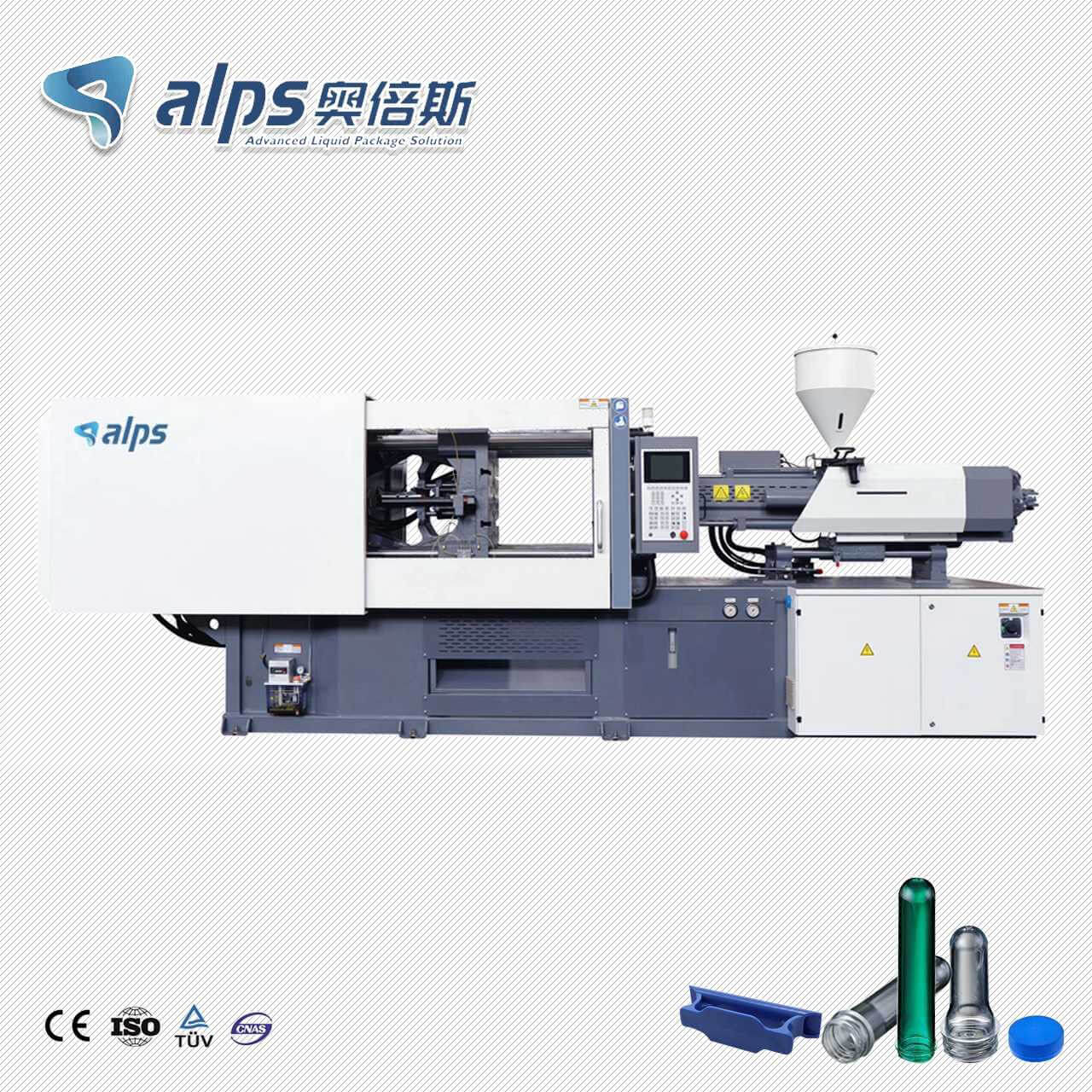
At its core, injection molding is a battle of pressures. On one side, you have an injection unit pushing molten resin into a cavity at thousands of pounds per square inch. On the other, you have a hydraulic or electric clamping system trying to keep the mold shut.
Tonnage is the measure of that closing force. It is not just about the size of the machine; it is about the equilibrium of forces. Calculating the correct tonnage ensures that the internal cavity pressure does not exceed the external clamping pressure. When these forces are balanced, the part cools in a stable environment, ensuring dimensional accuracy and surface integrity.
While modern software can provide complex simulations, most engineers rely on a foundational mathematical formula to estimate clamping force. The standard formula is:
F = A x P
Where:
F is the Clamping Force (typically measured in US tons).
A is the Total Projected Area of the part (measured in square inches).
P is the Injection Pressure Constant (measured in tons per square inch).
Most resins require a pressure constant between 2 and 8 tons per square inch. Selecting the right constant depends heavily on the flow characteristics of the material and the complexity of the part.
The "Projected Area" is often misunderstood by beginners. It is not the total surface area of the 3D part. Instead, imagine a light shining directly onto the mold; the "shadow" cast by the part on the plane of the mold face is your projected area.
To calculate this accurately, you must:
1. Calculate the 2D footprint of the part.
2. Multiply by the number of cavities. If you have a 16-cavity mold, the projected area is 16 times that of a single part.
3. Include the "Cold Runner" system. Many people forget that molten plastic also fills the runners and gates. These areas are also under pressure and contribute to the force trying to push the mold halves apart.
Plastic behaves differently depending on its molecular structure. Some resins are "watery" when melted (high flow), while others are like thick molasses (low flow). This determines how much pressure is needed to pack the mold.
Material Type | Flow Characteristic | Tonnage Constant (Tons/sq in) |
Polyethylene (PE) | High Flow | 2 – 3 |
Polypropylene (PP) | High Flow | 2 – 3 |
Polystyrene (PS) | Medium Flow | 3 – 4 |
Polycarbonate (PC) | Low Flow | 5 – 8 |
Acrylic (PMMA) | Low Flow | 6 – 8 |
If you are molding a thin-walled part with a low-flow material like Polycarbonate, you will need significantly higher tonnage than a thick-walled Polypropylene part of the same size.
The water bottling industry provides a perfect case study for high-precision tonnage calculation. In a modern bottling facility, production happens in two main stages: the injection molding of the "preform" and the blow molding of the final bottle.
Preforms look like heavy-duty plastic test tubes with finished threads. These are almost exclusively made of Polyethylene Terephthalate (PET). Because PET has a specific viscosity and the cycle times must be incredibly fast (often under 10 seconds), the tonnage must be calculated perfectly to allow for high-speed injection without flashing the threads.
Unlike a standard industrial part, water bottling lines utilize high-cavitation molds—often ranging from 48 to 128 cavities in a single machine.
Massive Projected Area: Even though a single preform has a small footprint, 128 of them, plus a massive manifold runner system, creates a huge projected area.
Clamping Uniformity: In these massive molds, the tonnage must be distributed evenly across the platen. If the calculation is off, the center cavities may stay sealed while the outer cavities flash.
The caps on your water bottle are usually HDPE or PP. These are molded at high speeds in 64- or 96-cavity molds. Because the threads are functional components, the tonnage must be high enough to prevent any "parting line" growth, which would make the cap leak or fail to screw onto the bottle.
In engineering, running a machine at its absolute limit is a recipe for disaster. If your calculation results in 195 tons of force, you should not put that mold in a 200-ton machine.
The 20% Buffer: Always aim to use only 80% of the machine's rated capacity. This allows for fluctuations in material viscosity, temperature changes, and hydraulic surges.
Wall Thickness Impact: The thinner the wall of your part, the higher the injection pressure required to fill it before it freezes. For ultra-thin parts (less than 1mm), you might need to double your estimated tonnage constant.
The F = A x P formula works best for flat, "pancake" style parts. However, many industrial parts have complex geometries that complicate the math.
Side Actions and Slides: If your mold uses cams or slides to create holes in the side of a part, these components also experience pressure. While they don't always add to the clamping tonnage, they require the mold base to be more robust.
Deep-Drawn Parts: For parts like tall buckets or crates, the "shadow" remains the same, but the high vertical walls can create friction and "drag" during injection. This requires a more nuanced approach to pressure constants to ensure the part is packed out without blowing the mold open.
Calculating injection molding tonnage is both a science and an art. The consequences of a "near miss" in calculation can be expensive:
Tool Damage: Over-tonnage can "sink" the mold into the platens or crush the delicate vents that allow air to escape. This leads to "burn marks" on the plastic.
Part Quality: Under-tonnage leads to flash, which often requires manual trimming—a labor cost that can kill the profitability of a project.
Energy Consumption: Using a 500-ton machine for a part that only requires 200 tons is a massive waste of electricity and floor space.
Whether you are designing a single-cavity prototype or a 128-cavity water bottle preform system, the math remains the same. Start with the projected area, factor in your material's flow, and always leave yourself a safety margin. By mastering these variables, you ensure a repeatable, efficient, and profitable molding process.



By continuing to use the site you agree to our privacy policy Terms and Conditions.