โซลูชันแพ็คเกจของเหลวขั้นสูง
มีคำถามไหม?
ติดต่อเรา


A carbonated beverage may look like an ordinary liquid, but dissolved carbon dioxide (CO2 ) gives it its characteristic bubbles, fizz, and refreshing sensation. This raises an interesting question: what percentage of a soda is actually liquid, and how much of it comes from the dissolved gas?
The answer depends on how the percentage is measured. Liquid can be considered in terms of its share of the beverage's total mass or the volume it occupies inside a can. CO2 content, meanwhile, is often expressed in volumes, a measure that describes the gas equivalent of the dissolved carbon dioxide rather than the space it occupies in the container.
This article explains these measurements, calculates the approximate mass percentage of CO2 , examines liquid fill volume and headspace, and clarifies what a carbonation level of 3.5 volumes actually means.

A carbonated beverage consists mainly of liquid, with carbon dioxide (CO2 ) dissolved in it. Its liquid percentage can be understood in three ways:
By mass: Dissolved CO2 accounts for only a small share of the beverage's total weight.
By volume: Liquid occupies most of the can, while a small headspace remains above it.
By CO2 volumes: This measures the equivalent gas volume of dissolved CO2 relative to the beverage volume.
These measurements describe different properties and cannot be used interchangeably. For example, 3.5 volumes of CO2 does not mean gas occupies 350% of the drink's volume. In production, a เครื่องบรรจุเครื่องดื่ม controls the target liquid fill volume, while carbonation level depends on separate process conditions.
A carbonation level of 3.5 volumes means that the CO2 dissolved in one liter of beverage is equivalent to approximately 3.5 liters of gas under specified reference conditions. To estimate its mass percentage:
CO2 content: 3.5×1.96 = 6.86 g per liter.
Approximate beverage mass: 1,000 g per liter.
CO2 mass percentage: 6.86÷1,000×100≈0.69%.
This is an approximate calculation. The actual percentage varies with carbonation level and beverage density.
Most of a soda's mass comes from water. Depending on the recipe, it may also contain sugar or sweeteners, acids, flavorings, and other ingredients. Although carbonation creates fizz and influences mouthfeel, dissolved CO2 typically accounts for only a small proportion of the beverage's total mass.
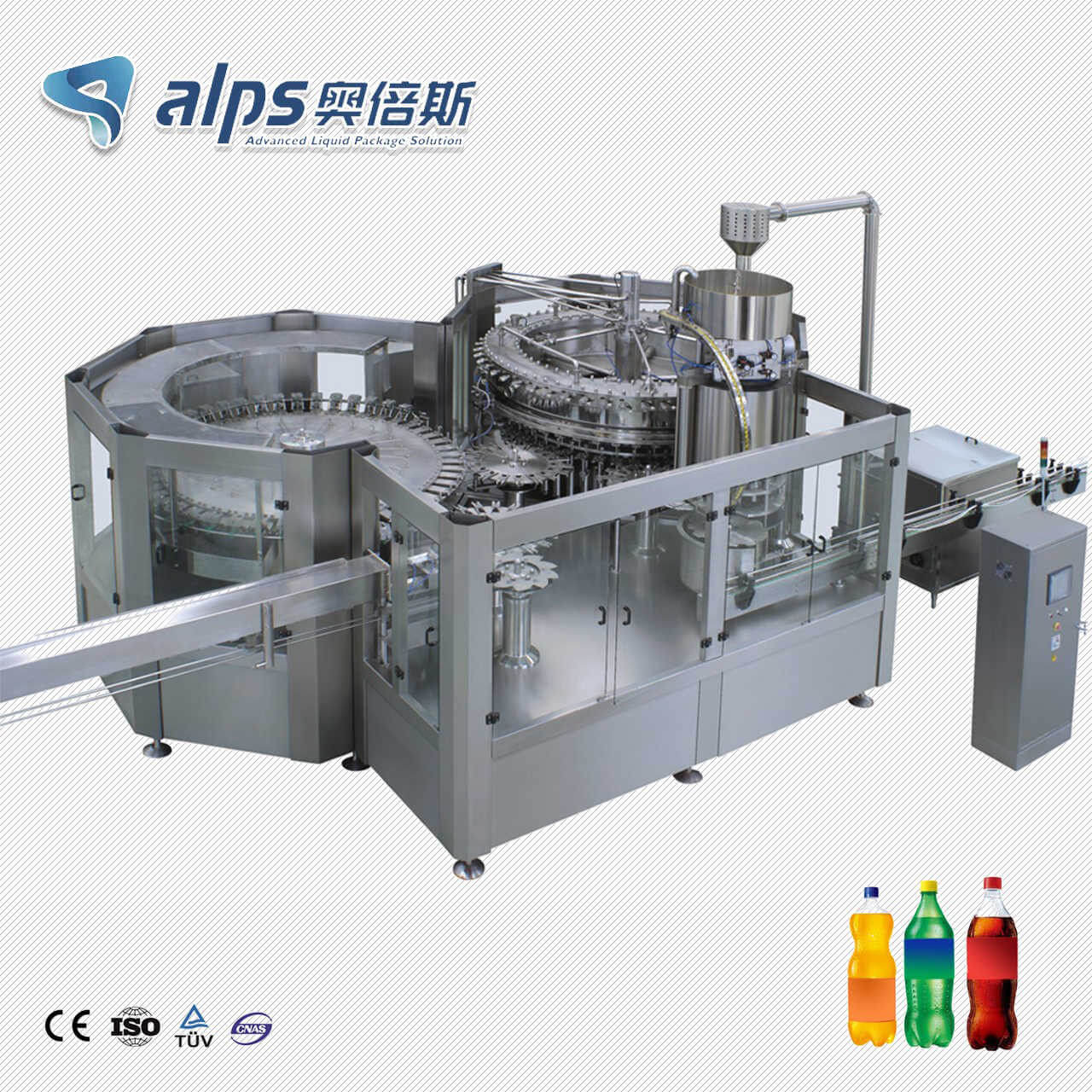
A beverage can is not filled completely to the top. A small headspace remains above the liquid before sealing, helping accommodate the packaging process. This space is separate from the CO2 dissolved in the drink.
ปัจจัย | Role in Can Filling |
Liquid fill volume | Determines how much beverage enters the can |
headspace | Provides space between the liquid surface and the can top |
Can specifications | Define the container's capacity and filling requirements |
The target fill must match the can size, seaming requirements, and product specifications. A เครื่องบรรจุกระป๋องเครื่องดื่ม controls the amount of liquid dispensed to meet the required fill level. However, fill volume and CO2 content are separate parameters: the amount of liquid in a can does not directly indicate its carbonation level, which must be controlled independently.
A carbonation level of 3.5 volumes means that one liter of beverage contains dissolved CO2 equivalent to approximately 3.5 liters of gas under specified reference conditions. This measurement describes the amount of dissolved gas. It does not mean the can contains 3.5 liters of free gas or that gas makes up 350% of the drink's volume.
Several factors affect CO2 dissolution and retention:
Temperature: Colder liquids generally retain more dissolved CO2 .
Pressure: Higher pressure supports CO2 การละลาย
Formulation: Ingredients and beverage composition can influence carbonation behavior.
During production, carbonation targets must align with filling and packaging requirements. A เครื่องบรรจุเครื่องดื่มอัดลม operates as part of a coordinated production line, alongside beverage preparation, filling, seaming, and inspection processes. Maintaining suitable process conditions helps preserve the intended carbonation level, while accurate filling ensures each can meets its target volume. These are separate but related requirements, so both must be considered when planning a สายการผลิตเครื่องดื่มอัดลม.

Carbonated beverages consist primarily of liquid, while dissolved CO2 typically accounts for only a small percentage of their total mass. Understanding the difference between CO2 mass percentage, liquid fill volume, and carbonation level helps clarify how these drinks are composed. In particular, CO2 volumes describe the equivalent gas volume under reference conditions, not the proportion of free gas inside a can.
For beverage producers, maintaining the right carbonation level and fill volume requires suitable equipment and coordinated production processes. เครื่องจักรแอลป์ provides beverage production lines, filling and packaging equipment, and project planning support to help customers develop solutions suited to their production needs. ติดต่อ Alps Machine to discuss your beverage production project and explore suitable equipment options.


การใช้งานเว็บไซต์ต่อไปนี้ถือว่าคุณยอมรับนโยบายความเป็นส่วนตัวและข้อกำหนดและเงื่อนไข ของ เรา